<?xml version="1.0" encoding="UTF-8"?>
<feed xmlns="http://www.w3.org/2005/Atom">
  <title type="text">DC Historic Sites</title>
  <updated>2026-03-25T12:52:51+00:00</updated>
  <generator uri="http://framework.zend.com" version="1.12.20">Zend_Feed_Writer</generator>
  <link rel="alternate" type="text/html" href="https://historicsites.dcpreservation.org/"/>
  <link rel="self" type="application/atom+xml" href="https://historicsites.dcpreservation.org/items/browse?output=rss2"/>
  <id>https://historicsites.dcpreservation.org/</id>
  <author>
    <name>DC Historic Sites</name>
    <uri>https://historicsites.dcpreservation.org</uri>
  </author>
  <link rel="hub" href="https://pubsubhubbub.appspot.com/"/>
  <entry>
    <title type="html"><![CDATA[Civil Rights Tour: Raphael G. Urciolo Residence: 4215 Argyle Terrace NW]]></title>
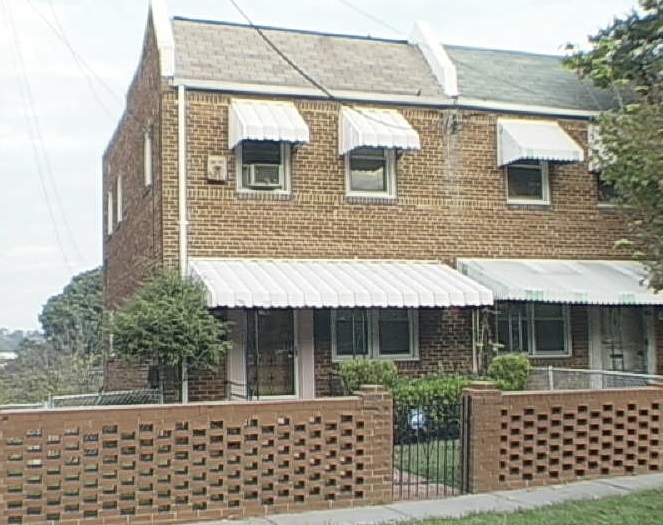
    <summary type="html"><![CDATA[<p><strong><em>“I would prefer to sell to the colored man because he has a so much harder time getting a house.” </p><p></em></strong></p><img src="https://historicsites.dcpreservation.org/files/fullsize/78e1d04ab546a8468b975bc0cabe86ad.jpg" alt="Ralphael Urciolo House, 4215 Argyle Terrace, NW; designed by African American architect Howard Mackey, 1952." /><br/><p>Raphael Urciolo, who gave this testimony in <em>Urciolo v. Hodge (</em>U.S. Court of Appeals for the District of Columbia, 1945) contributed to one of DC’s and the nation’s most significant civil rights victories of the 20th century: the Supreme Court’s 1948 ruling in <em>Hurd v. Hodge </em>and <em>Shelley v. Kraemer.  </em>This landmark Supreme Court case ruled that enforcing racially restrictive covenants, which barred white homeowners from selling or renting to African Americans, was unconstitutional.
Urciolo was an attorney and real estate broker who regularly purchased houses with covenants, and then sold them to Black clients. This practice took advantage of a market in which Black homeseekers, facing a scarce supply of decent housing, paid significantly more for houses than White buyers did. Urciolo also stood firmly against racial discrimination, and represented himself in the DC courts when he was sued for breaking covenants. (Charles Hamilton Houston, the attorney for Urciolo’s clients James and Mary Hurd, represented Urciolo as well as the Hurds before the Supreme Court.)
Support for Black economic advancement also led Urciolo and his brother Joseph, a partner in the real estate business that they inherited from their father, to teach real estate law at Howard University.
In 1952, Urciolo commissioned architect Howard Mackey, a founder and longtime chair of the Howard University School of Architecture, to design this house on Argyle Terrace for his family. Urciolo was a scholar of linguistics, and the home’s large basement was created to hold his extensive library. 
</p><p><em><strong><a href="https://historicsites.dcpreservation.org/items/show/1088">For more (including 2 images) view the original article</a></strong></em></p>]]></summary>
    <published>2021-02-26T01:04:47+00:00</published>
    <updated>2026-03-25T12:52:51+00:00</updated>
    <link rel="alternate" type="text/html" href="https://historicsites.dcpreservation.org/items/show/1088"/>
    <id>https://historicsites.dcpreservation.org/items/show/1088</id>
    <author>
      <name>DC Historic Preservation Office</name>
    </author>
  </entry>
  <entry>
    <title type="html"><![CDATA[Civil Rights Tour: Legal Campaigns - The Hundleys and Racially Restrictive Covenants ]]></title>
    <summary type="html"><![CDATA[<p><strong><em>In 1942, the rowhouse at 2530 13th Street was at the center of a successful legal battle to open this section of Columbia Heights to Black residence.</em></strong></p><img src="https://historicsites.dcpreservation.org/files/fullsize/b495b9b395ec3d36b4ba3274626a2a6e.jpg" alt="Photo of former Hundley House at 2530 13th Street NW (2020)" /><br/><p>Purchased by two educators, Mary and Frederick Hundley, this 1910 house was originally sold by developer Harry Wardman with a covenant in its deed that barred it from ever being sold to “any Negro or colored person.” Furthermore, in 1926-1928, white residents had signed legally binding agreements that effectively barred African Americans from living west of 13th Street. A few months after the Hundleys moved in, white neighbors sued them for violating these racial restrictions. The court agreed with the neighbors. </p><p>In his appeal for the Hundleys, attorney <a href="https://historicsites.dcpreservation.org/items/show/939">Charles Hamilton Houston</a> argued that Blacks already filled blocks east of 13th Street and occupied another house (without a racial deed covenant) in the same row as the Hundleys. Houston also argued that covenants were depreciating values by limiting sales to white buyers in an area where Black people would pay far more for houses, due to pent-up demand. </p><p>In December 1942, the DC Court of Appeals ruled in the Hundleys’ favor, making this the first case in which a neighborhood’s racial makeup was successfully used as an argument for ending the use of restrictive housing covenants. </p><p>Two and half years earlier, another Black household that breached the 13th Street racial divide, survived a more violent response to the “invasion” of a white neighborhood. That house, at 1324 Harvard Street, was bombed. There was some speculation over whether the bombing was instigated by white business owners “to prevent other Negroes from buying in the neighborhood.” This speculation was supported by the fact that Edna Holland—a teacher at Armstrong High School who lived in the neighborhood with her family—faced intense pressure by a white citizens group to move out.</p><p><em><strong><a href="https://historicsites.dcpreservation.org/items/show/1060">For more (including 3 images) view the original article</a></strong></em></p>]]></summary>
    <published>2020-12-10T02:27:47+00:00</published>
    <updated>2026-03-25T12:52:50+00:00</updated>
    <link rel="alternate" type="text/html" href="https://historicsites.dcpreservation.org/items/show/1060"/>
    <id>https://historicsites.dcpreservation.org/items/show/1060</id>
    <author>
      <name>DC Historic Preservation Office</name>
    </author>
  </entry>
  <entry>
    <title type="html"><![CDATA[Civil Rights Site: Civic Activism - Hecht&#039;s Department Store: 575 7th Street NW]]></title>
    <summary type="html"><![CDATA[<p><strong><em>Ask older Black Washingtonians about Hecht's and they may recount that their mothers weren’t allowed to try on clothes, or that only white customers could dine at the store's basement lunch counter. </em></strong></p><img src="https://historicsites.dcpreservation.org/files/fullsize/cb7f3944bc0289c636cd681164749207.jpg" alt="Photo of the just-completed Hecht Company Store at 7th and F Streets, 1925" /><br/><p>Hecht’s was one of the largest department stores in the city for much of the 20th century. In the 1950s, it became a key site of protest in the battle to end discrimination against Black shoppers.</p><p>Although a 1929 survey by the Black-owned <em>Washington Tribune</em> found DC’s department stores to be among the few places where white and Black women were treated equally, Hecht’s later closed its fitting rooms to Black customers. Despite protests and the threat of a boycott, the policy remained in place. </p><p>In 1951, Hecht’s was targeted in a campaign co-led by 87-year-old Mary Church Terrell to integrate downtown stores and restaurants. Three months of failed negotiations led Terrell’s group to launch pickets and <a href="https://historicsites.dcpreservation.org/items/show/971">lunch counter sit-ins</a>. As explained by co-organizer Annie Stein, volunteers took two-hour shifts, with “between 15 and 20 people sitting down at a time all through the day on Saturday[s].” Over the course of several months, the group garnered citywide and national support, and in January 1952 Hecht’s finally began providing full service to Black customers. </p><p>In 1925, the Hecht Company built this eight-story building at 7th and F streets, significantly expanding its quarters from the two adjacent buildings to its south at 513-517 7th Street NW.</p><p><em><strong><a href="https://historicsites.dcpreservation.org/items/show/1059">For more (including 2 images) view the original article</a></strong></em></p>]]></summary>
    <published>2020-12-09T02:59:36+00:00</published>
    <updated>2026-03-25T12:52:50+00:00</updated>
    <link rel="alternate" type="text/html" href="https://historicsites.dcpreservation.org/items/show/1059"/>
    <id>https://historicsites.dcpreservation.org/items/show/1059</id>
    <author>
      <name>DC Historic Preservation Office</name>
    </author>
  </entry>
  <entry>
    <title type="html"><![CDATA[Civil Rights Tour: Political Empowerment - Wilhelmina and Calvin Rolark, Crusaders for Justice: 524 Foxhall Place SE]]></title>
    <summary type="html"><![CDATA[<p><strong><em>Attorney and politician Wilhelmina Jackson Rolark (1916–2006) and publisher and executive Calvin Rolark (1927–1994) were activists and outspoken advocates for DC. Their legacy is carried on by the institutions they founded.</em></strong></p><img src="https://historicsites.dcpreservation.org/files/fullsize/ad16dd33cff406a9d84d5006b4ed14df.jpg" alt="Photo of former Rolark home at 524 Foxhall Place, SE" /><br/><p>Born and raised in Portsmouth, Virginia, Wilhelmina Jackson moved to Washington in 1933 to attend Howard University, earning bachelor’s and master’s degrees in political science. Her career began with the <a href="https://historicsites.dcpreservation.org/items/show/1017">National Negro Congress</a> (NNC). Founded in 1936 to address police brutality, the NNC soon extended its advocacy to include conditions for domestic workers. When the Washington Chapter of the Domestic Workers’ Union opened headquarters at NNC offices at 717 Florida Avenue NW, Jackson and colleagues established a free job placement center for domestic workers. They followed up by pressing employers to pay fair wages and provide safe working conditions. </p><p>Around 1940, Jackson went to work for Swedish social scientist Gunnar Myrdal, traveling through the South to document Black living conditions. Myrdal incorporated her research into his trailblazing book on race relations, <em>An American Dilemma</em> (1944). Jackson earned a law degree from the Robert H. Terrell Law School (since closed) and opened her own practice in 1947. </p><p>In 1962 Jackson married journalist Calvin Rolark, a Texan who arrived in Washington about a decade earlier. In 1964, with $500 provided by his wife, Rolark founded the <em>Washington Informer, </em>taking on the mantles of editor and publisher. The <em>Informer </em>championed the achievements of the community, including the Rolarks, and spoke out against injustice. In 1969 the couple founded the United Black Fund as an alternative to the United Way, which they felt did not necessarily benefit Black Washington. </p><p>The Rolarks joined <a href="https://historicsites.dcpreservation.org/items/show/1003">Rev. Walter Fauntroy</a> and others in a successful 1972 effort to unseat Rep. John L. McMillan, long-time chair of the House District Committee, by registering African American voters in his South Carolina district. The segregationist McMillan had consistently thwarted DC residents’ efforts to govern themselves. Once he was gone, Home Rule legislation advanced through Congress and, in 1973, was signed into law. </p><p>That same year, Wilhelmina Rolark, tired of the sexism and racism she routinely encountered in the legal community, founded the National Association of Black Women Attorneys. She represented Ward 8 on the DC Council from 1977 through 1992, focusing on justice and policing issues, and championed the rights of working people. The Rolarks purchased the rowhouse at 524 Foxhall Place SE in 1965 where they lived out the remainder of their lives.</p><p><em><strong><a href="https://historicsites.dcpreservation.org/items/show/1058">For more view the original article</a></strong></em></p>]]></summary>
    <published>2020-12-02T21:31:47+00:00</published>
    <updated>2026-03-25T12:52:50+00:00</updated>
    <link rel="alternate" type="text/html" href="https://historicsites.dcpreservation.org/items/show/1058"/>
    <id>https://historicsites.dcpreservation.org/items/show/1058</id>
    <author>
      <name>DC Historic Preservation Office</name>
    </author>
  </entry>
  <entry>
    <title type="html"><![CDATA[Civil Rights Tour: Civic Activism: Murray Brothers and the Black Press: 918-922 U Street NW]]></title>
    <summary type="html"><![CDATA[<p><strong><em>Murray Brothers Printing Company opened in 1907, at the height of an era when Black businesses proliferated in DC. In 1920, the Murrays built this building at 918-922 U Street, moving their business to the heart of the city's African American community.</em></strong></p><img src="https://historicsites.dcpreservation.org/files/fullsize/6402ac53b530b72432e14c7bda5843c9.jpg" alt="Photograph of the former Murray Brothers Printing Press at 918-922 U Street NW, 2020" /><br/><p>Printing companies were an essential tool for independent Black newspapers, and these papers were a primary means for civil rights leaders to amplify the messages of organizations they led. F.H.M. Murray, whose sons ran the presses, worked closely with W.E.B. Du Bois in printing the NAACP’s <em>Crisis</em> newspaper when it launched in 1910. A decade later, the Murrays joined with editor William Walker to print the new <em>Washington Tribune</em>. The <em>Tribune</em> quickly became the city’s leading Black newspaper covering issues such as anti-Black police violence and opinion pieces demanding racial and economic justice. </p><p>Sports writer Sam Lacy, known for his long campaign to desegregate baseball, joined the <em>Tribune</em> in 1930. Lacy went on to write for Baltimore’s <em>Afro-American</em> newspaper from 1944 until his death in 2003. Among the many publications printed by Murray Brothers were several pamphlets written by Howard University sociologist Kelly Miller, including <em>The political plight of the Negro</em> (1913) and <em>Segregation: the caste system, and the civil service</em> (ca. 1914). </p><p>The Murray Brothers building also housed Murray’s Palace Casino, another family business. The building was designed by Black architect Isaiah T. Hatton, who also designed the Industrial Bank, at 11th and U, the Dunbar Theater and Southern Aid Society at 7th and T, and the Whitelaw Hotel at 13th and T, among other buildings in this neighborhood and throughout the city.</p><p><em><strong><a href="https://historicsites.dcpreservation.org/items/show/1057">For more view the original article</a></strong></em></p>]]></summary>
    <published>2020-12-02T21:17:14+00:00</published>
    <updated>2026-03-25T12:52:50+00:00</updated>
    <link rel="alternate" type="text/html" href="https://historicsites.dcpreservation.org/items/show/1057"/>
    <id>https://historicsites.dcpreservation.org/items/show/1057</id>
    <author>
      <name>DC Historic Preservation Office</name>
    </author>
  </entry>
  <entry>
    <title type="html"><![CDATA[Civil Rights Tour: Political Empowerment - Howard Croft, Social Justice Crusader: 1515 U Street SE]]></title>
    <summary type="html"><![CDATA[<p><strong><em>Howard Croft (1941-2020) is remembered as a fierce crusader for social justice and DC Statehood.</em></strong></p><img src="https://historicsites.dcpreservation.org/files/fullsize/eb043393acc34ef8debe9dfcb1b4bbed.jpg" alt="Photo of 1515 U Street SE" /><br/><p>Born and raised in Pennsylvania, Croft started his activist career just after college in the early 1960s, registering voters in Mississippi. Croft earned his Master's in social work from Columbia University through a National Urban League fellowship program that sought to train its own professionals. </p><p>He moved to DC accepting the role of field organizer for the Washington Urban League Neighborhood Center, “whipp[ing] into shape a core of student militants,” according to the <em>Evening Star</em>. Like many young Black activists, he then went to work for the United Planning Organization, which administered President Lyndon Johnson’s anti-poverty programs in DC. He and a few others were fired in April 1968, after protesting what they described as the program’s oppression and exploitation of the Black community. </p><p>The next year Croft joined the faculty of the recently founded <a href="https://historicsites.dcpreservation.org/items/show/1004">Federal City College</a> (FCC) where he helped organize the Lorton Project to educate those incarcerated in the District’s prison. When FCC became part of the University of the District of Columbia, Croft stayed on, teaching the history of labor activism and civil rights, as well as coordinating the Lorton project. He eventually chaired the Urban Studies Department at the school. </p><p>From the mid-1980s to 1991 he also served on the DC Parole Board, first appointed by Mayor Marion Barry. Croft resigned from UDC to run for City Council in April 1997, but lost the election. Two years later, he cofounded Health Care Now-The Greater Southeast Community Coalition to fight the closure of the only full-service hospital east of the Anacostia River, also the largest employer in that part of the District. </p><p>A longtime member of the <a href="https://historicsites.dcpreservation.org/items/show/929">DC Statehood Party</a>, Croft served as a delegate to the 1982 DC Statehood Constitutional Convention and helped draft the constitution. Soon after his June 20, 2020, death from Covid-19, the US House of Representatives passed legislation to make DC the 51st state. The Republican-controlled Senate ignored the bill, but the House effort stands as a tribute to Croft. </p><p>Since 1982, the Croft family has owned the house at 1515 U Street SE in the Anacostia Historic District.</p><p><em><strong><a href="https://historicsites.dcpreservation.org/items/show/1056">For more view the original article</a></strong></em></p>]]></summary>
    <published>2020-12-02T21:06:20+00:00</published>
    <updated>2026-03-25T12:52:50+00:00</updated>
    <link rel="alternate" type="text/html" href="https://historicsites.dcpreservation.org/items/show/1056"/>
    <id>https://historicsites.dcpreservation.org/items/show/1056</id>
    <author>
      <name>DC Historic Preservation Office</name>
    </author>
  </entry>
  <entry>
    <title type="html"><![CDATA[Civil Rights Tour: Education - Gardner Bishop, Barber and Activist: 1900 15th Street NW]]></title>
    <summary type="html"><![CDATA[<p><strong><em>For 40 years, the three-story building at 1900 15th Street NW housed B & D Barber Shop on the ground floor. The business was owned by Gardner LaClede Bishop (1909–1992), a leader in the mid-20th century battle to equalize and desegregate DC’s public schools.</em></strong></p><img src="https://historicsites.dcpreservation.org/files/fullsize/c97274c13da99d84343a1668ca859769.jpg" alt="[Untitled]" /><br/><p>Gardner Bishop moved to Washington from his home state of North Carolina in 1930. Ten years later, he opened his shop, which remained a fixture in the neighborhood until the building was converted to condominiums in the early 1980s. One Sunday morning in the late 1930s, Bishop let his four-year old daughter Judine use a swing in an empty whites-only playground. When told by a police officer that Judine was violating posted signage, Bishop told the officer, “she can’t read.” Bishop was arrested and fined ten dollars. </p><p>In 1947, Bishop became the spokesperson for parents at <a href="https://historicsites.dcpreservation.org/items/show/918">Browne Junior High</a> School in Northeast DC, a woefully over-enrolled school for Black children in the segregated school system. That fall, Bishop took 40 students to a meeting of DC’s Board of Education, where they announced a school boycott beginning the next day. Bishop felt that he and the majority of Black Washingtonians were victims of “double Jim Crow.” He would later explain, “Segregation was not only white against black, but it was also upper class blacks against the lower class. We were on the bottom shelf. I’m black and I’m poor, so I’m segregated twice.” </p><p>Despite these misgivings, Bishop joined forces with elite attorney <a href="https://historicsites.dcpreservation.org/items/show/939">Charles Hamilton Houston</a> in the <a href="https://historicsites.dcpreservation.org/items/show/924">"Central for Cardozo"</a> campaign, resulting in the transfer of Washington’s most cherished white high school to the DC Public Schools’ “Colored” Division. Bishop went on to take a lead role in organizing families east of the Anacostia River as plaintiffs in <em>Bolling v. Sharpe,</em> DC’s companion to <em>Brown v. Board of Education</em> (1954).</p><p>The ground floor barber shop is now a residential unit in the former dwelling that was converted to condominiums in the 1980s.</p><p><em><strong><a href="https://historicsites.dcpreservation.org/items/show/1055">For more (including 4 images) view the original article</a></strong></em></p>]]></summary>
    <published>2020-12-01T22:06:49+00:00</published>
    <updated>2026-03-25T12:52:50+00:00</updated>
    <link rel="alternate" type="text/html" href="https://historicsites.dcpreservation.org/items/show/1055"/>
    <id>https://historicsites.dcpreservation.org/items/show/1055</id>
    <author>
      <name>DC Historic Preservation Office</name>
    </author>
  </entry>
  <entry>
    <title type="html"><![CDATA[Civil Rights Tour: Protests - Childs Restaurant Sit-Ins: 2 Massachusetts Avenue NW]]></title>
    <summary type="html"><![CDATA[<p><strong><em>The distinctive stone building at the apex of Massachusetts Avenue and North Capitol Street was designed and built as a Childs Restaurant in 1925 to attract visitors—white visitors, that is—as they arrived in the city through nearby Union Station.</em></strong></p><img src="https://historicsites.dcpreservation.org/files/fullsize/cc5570d94eea90a1f289694324aa0d20.jpg" alt="Photo of the former Childs Restaurant at 2 Massachusetts Avenue NW" /><br/><p>In February 1949, the Legislative Assembly and Rally to End Segregation and Discrimination was held in Washington, DC, attracting civil rights leaders from around the country. On Saturday afternoon of the conference, a group of participants planned a sit-in at Childs restaurant on Massachusetts Avenue to protest the restaurant chain's whites-only policy. </p><p>On that February afternoon, the racially mixed group of 80 filled the lunchroom’s tables and tried to order, but in accordance with the restaurant's policy, the group was denied service. Three hours later, the peaceful sit-in ended without incident. But the demonstration was not in vain. The following year, <a href="https://historicsites.dcpreservation.org/items/show/970">Mary Church Terrell</a> and other activists attempted to eat at <a href="https://historicsites.dcpreservation.org/items/show/971">Thompson’s Restaurant,</a> a downtown cafeteria that, like Childs and many other eateries, had a whites-only policy. After they were denied service, the city promptly filed a lawsuit on their behalf. </p><p>The conference, scheduled to coincide with the Lincoln’s Birthday Holiday (later combined with Washington’s Birthday as Presidents Day) and the end of Negro History Week, drew about 1,000 attendees and featured speakers such as W.E.B. Du Bois of the Council on African Affairs; former Vice President Henry A. Wallace, now head of the Progressive Party; Congressman Adam Clayton Powell (D-NY); and <a href="https://historicsites.dcpreservation.org/items/show/1027">E. B. Henderson</a>, director of health and physical education for the DC Public Schools, Colored Division. Among the resolutions the group adopted was a call to end segregation in the District of Columbia. </p><p>The Assembly—which had been billed by its organizers, the Improved Benevolent-Protective Order of Elks of the World, as non-partisan—did not proceed as peacefully as the sit-in. Even before it started, sponsors such as the National Council of Negro Women and the NAACP withdrew their support, suspecting that Du Bois and Wallace would push it too far left. Sen. Hubert Humphrey (D-MN) and other speakers also pulled out for fear of being associated with the Progressive Party, which was viewed as too friendly to Communism and the Soviet Union. As described by the <em>Chicago Defender</em>, a leading Black newspaper, the conference “broke up in bedlam,” as Elks Grand Exalted Leader J. Finley Wilson struggled to prevent the Progressive Party from gaining control of the event. </p><p>Three years after the conference, in 1953, the U.S. Supreme Court ruled in <em>District of Columbia v. John R. Thompson</em> Co., Inc. that segregated eating places in Washington, DC were unconstitutional.</p><p>The former restaurant is now home to a bank. </p><p><em><strong><a href="https://historicsites.dcpreservation.org/items/show/1054">For more (including 2 images) view the original article</a></strong></em></p>]]></summary>
    <published>2020-12-01T03:53:50+00:00</published>
    <updated>2026-03-25T12:52:50+00:00</updated>
    <link rel="alternate" type="text/html" href="https://historicsites.dcpreservation.org/items/show/1054"/>
    <id>https://historicsites.dcpreservation.org/items/show/1054</id>
    <author>
      <name>DC Historic Preservation Office</name>
    </author>
  </entry>
  <entry>
    <title type="html"><![CDATA[Civil Rights Tour: Political Empowerment - Walter Washington, Mayor-Commissioner: 408 T Street NW]]></title>
    <summary type="html"><![CDATA[<img src="https://historicsites.dcpreservation.org/files/fullsize/be499ba4d9213824fe858fbbeb9d4bbd.jpg" alt="Photo of the first-elected members of DC City Council and Walter Washington, the first-elected mayor (center, front row), 1975." /><br/><p>Walter Washington (1915-2003) became the first African American mayor of a major American city, and the first mayor in DC since 1871 when President Lyndon Johnson appointed him to the position in 1967. Washington served as mayor-commissioner from 1967-1974, but after the city finally won the right to self-governance in 1973—thanks to campaigns waged by <a href="https://historicsites.dcpreservation.org/items/show/1003">Rev. Walter Fauntroy</a>, <a href="https://historicsites.dcpreservation.org/items/show/968">SNCC</a>'s Marion Barry, and grassroots activists across the city—he then became the city's first elected mayor (1974-1979). </p><p>Congressional passage of DC's home rule act was a milestone in local politics and a major achievement for many veterans of the southern Civil Rights Movement who were drawn to DC in the late 1960s. Washington served during this seminal period in the city's history. </p><p>A native of Jamestown, New York, Washington arrived in DC in 1934 to attend Howard University where he earned bachelor’s and law degrees. Although engaged in community and civil rights groups, such as the <a href="https://historicsites.dcpreservation.org/items/show/974">Washington Urban League</a> and the <a href="https://historicsites.dcpreservation.org/items/show/958">New Negro Alliance</a>, Washington was not an activist. He focused instead on a career in housing, moving up the ranks at the Alley Dwelling Authority (ADA), becoming executive director of ADA’s successor, the National Capital Housing Authority in 1961. After a stint in New York City heading up a larger Housing Authority there, Washington returned to DC in 1967. As mayor-commissioner he replaced the federally appointed three-man commissioner form of government that had ruled the city since 1874. </p><p>Walter Washington and his wife Benetta Bullock Washington—a national leader in education policy —moved into her family's home at 408 T Street NW in Le Droit Park with Walter when they married in 1941. Following her death in 1991, he purchased the adjoining house at 410 T Street NW and connected the two buildings. The property, no longer in Washington family hands, is currently undergoing renovation.</p><p><em><strong><a href="https://historicsites.dcpreservation.org/items/show/1044">For more (including 3 images) view the original article</a></strong></em></p>]]></summary>
    <published>2019-10-16T18:51:04+00:00</published>
    <updated>2026-03-25T12:52:50+00:00</updated>
    <link rel="alternate" type="text/html" href="https://historicsites.dcpreservation.org/items/show/1044"/>
    <id>https://historicsites.dcpreservation.org/items/show/1044</id>
    <author>
      <name>DC Historic Preservation Office</name>
    </author>
  </entry>
  <entry>
    <title type="html"><![CDATA[Civil Rights Tour: Legal Campaigns - Hurd v. Hodge, Landmark Supreme Court Case: 116 Bryant Street NW]]></title>
    <summary type="html"><![CDATA[<img src="https://historicsites.dcpreservation.org/files/fullsize/25cefc76753987a50c08776f7618295f.jpg" alt="Photo of James and Mary Hurd House at 116 Bryant Street NW, 2019" /><br/><p>The James and Mary Hurd house at 116 Bryant Street in Bloomingdale was at the center of the Supreme Court's landmark 1948 decision ending court enforcement of racially restrictive real estate covenants. The case, <em>Hurd v. Hodge,</em> was DC's companion to St. Louis and Detroit cases known together as <em>Shelley v. Kraemer.</em>
Beginning in the 1920s, DC's Bloomingdale neighborhood had become a national epicenter of legal challenges to covenants as Blacks attempted to move to restricted houses in the neighborhood near unrestricted blocks where African Americans already lived. The proximity of Howard University made this area especially attractive to middle class Black families. <a href="https://historicsites.dcpreservation.org/items/show/940">Howard University Law School</a>, meanwhile, generated a cadre of well-trained civil rights attorneys who were prepared to fight housing discrimination in the courts.
Number 116 Bryant Street was the first of four  houses on this block with racial restrictions that were  purchased and resold to Black families by real estate broker Raphael Urciolo in the early 1940s. White neighbors, Lena and Frederic Hodge sued Urciolo and the new owners, James and Mary Hurd, for violating the covenant which barred the house’s sale to African Americans. Attorney <a href="https://historicsites.dcpreservation.org/items/show/939">Charles Hamilton Houston</a> amassed extensive contextual evidence to show that covenants in Bloomingdale no longer served their intended purpose of keeping the neighborhood white and were depressing home values in an area where African Americans were willing to pay more than market rate. </p><p>Despite Houston's efforts in this and several other Bloomingdale cases, the DC courts upheld the covenant, but the US Supreme Court agreed to hear the case as a companion to <em>Shelley. </em>Loren Miller and <a href="https://historicsites.dcpreservation.org/items/show/1011">Thurgood Marshall</a>, the NAACP attorneys for <em>Shelley </em>and the Detroit case, <em>McGhee v. Sipes, </em>successfully argued that court enforcement of racial covenants violated the 14<sup>th</sup> Amendment. However, because DC is not a state and not necessarily subject to the 14<sup>th</sup> Amendment, the ruling in <em>Hurd v. Hodge </em>was based on the Civil Rights Act of 1866, which requires the federal government to treat its citizens equally.  


</p><p><em><strong><a href="https://historicsites.dcpreservation.org/items/show/1030">For more (including 2 images) view the original article</a></strong></em></p>]]></summary>
    <published>2019-09-20T01:13:59+00:00</published>
    <updated>2026-03-25T12:52:50+00:00</updated>
    <link rel="alternate" type="text/html" href="https://historicsites.dcpreservation.org/items/show/1030"/>
    <id>https://historicsites.dcpreservation.org/items/show/1030</id>
    <author>
      <name>DC Historic Preservation Office</name>
    </author>
  </entry>
</feed>