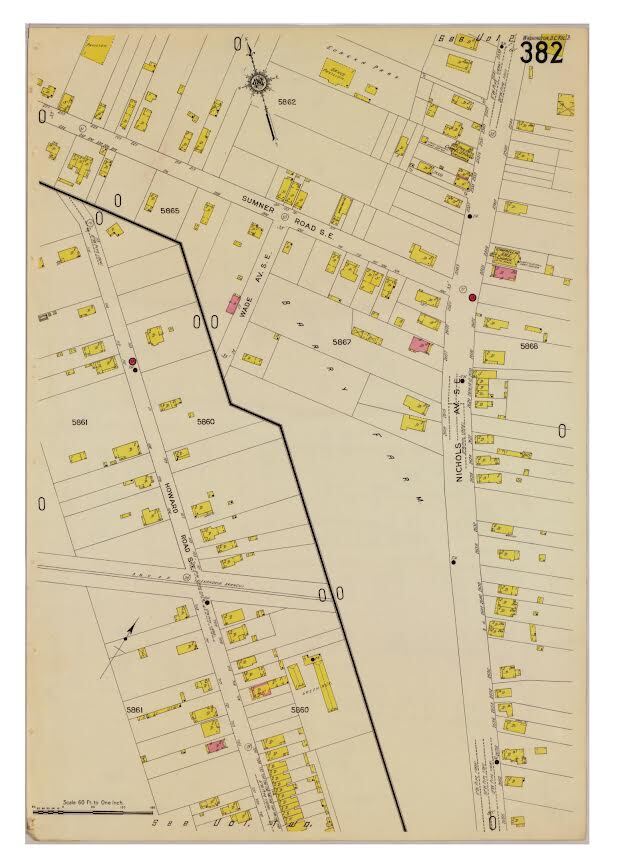
Sports and Recreation Tour: Eureka Park (1880-1925): This park was one of seven parks that served Black residents in Washington, DC, between 1880 and 1925.
Text
Eureka Park, one of seven parks serving Black residents in Washington, DC, between 1880 and 1925, was a vibrant and popular recreational space. The park was accessible by streetcar and attracted visitors from all over the city – and even some from Baltimore who traveled by train.
Less than two acres in size, Eureka Park was described as a picturesque green spot off of Nichols Avenue in Hillsdale. The park offered a range of activities, including swings, a merry-go-round, picnic tables, a baseball diamond, and a dancing pavilion. During the summer, the park was popular for its nightly dances with local artists. It hosted unusual events, such as baby pageants, pig races, and lamb roasts. It was also a venue for political rallies and speeches, including events for Black Republicans, such as a rally held by Major Charles Douglass, son of Frederick Douglass. Various organizations, including churches, fraternal orders, labor groups, and charities often held meetings at the park. The Anacostia Bicycle Club, one of the few cycling clubs that allowed Black members, also gathered in the park for picnics after long races.
Despite its popularity, Eureka Park's license was revoked in 1918 after white residents, who lived near the park, made inaccurate claims about the behavior of the park's patrons. This led to the park's closure, but part of the park was eventually reopened as the Barry Farm Playground. This was an unfortunate loss for Black residents who were excluded from most of the city's parks.
This site is a stop on the Sports and Recreation in DC tour. It is no longer extant and is not a desginated historic landmark.
Files