Gone, But Not Forgotten
DC is a city with many layers of history, as illustrated by the built environment's many architectural styles. As the city grew and changed, so did its buildings, many of which were altered or simply demolished. Sometimes architectural tastes were a factor, but often times economic pressures brought about demolition. Because of this, Washington's built environment is a mix of both old and new construction in a variety of styles and materials.
Before the 1960s, historic preservation laws were rare, with historic preservation ordinances in place in only a handful of cities (Note: the Old Georgetown Act was passed in 1950). Federal efforts had been focused on sites of national historical significance, as well as historic documentation through the Historic American Buildings Survey (HABS), established during the New Deal Era. However, even when a building was documented, there was a good chance that it would still be demolished, as cities changed and the federal government promoted urban renewal.
In 1966, Congress passed the National Historic Preservation Act (NHPA). This law encourages the preservation of historically, architecturally, and archaeologically-significant places. This is done through the Section 106 process, which focuses on federal "undertakings," and the law's promotion of state and local preservation efforts. NHPA also established the National Register of Historic Places, which has grown to include almost 100,000 listed places.
Shortly thereafter, in 1971, Don't Tear It Down (DC Preservation League's original name) was founded to save the Old Post Office on Pennsylvania Avenue NW. By the end of the decade, in 1978, DC had passed a local preservation ordinance, the DC Historic Landmark and Historic District Protection Act, which established the DC Inventory of Historic Sites and a local process for preserving historic landmarks and districts. Despite these protections and processes, demolition may still occur, and some of the sites on this tour were demolished after the federal and local laws were established.
This tour includes historic sites in DC that were recognized for their historical and/or architectural significance, but were still demolished. Some of these lost places went down with a fight, but all of these losses reflect a constantly changing city. The list includes: Western Market, The Six Buildings, Church of the Covenant, McGill Building, the old Dunbar High School, and several more. Also, sometimes a loss occurs through fire, which is what happened to the Dry Barn at St. Elizabeths in 2022.
Sites 20

Ray's Warehouse (1855-1974): This demolished building was an important storage facility located on the once-industrial Georgetown waterfront.
A Georgetown flour mill built in 1847 by Alexander Ray (1799-1878) and his two sons, Andrew Ross Ray (1826-1886) and Albert Ross Ray (1829-1882) made use of the hydroelectric power from the Chesapeake…
Western Market (1872 - circa 1966): This public market, since demolished, was one of three markets dating back to the early days of Washington.
Early on, three public markets were envisioned for the city: Center (Downtown), Eastern (Capitol Hill), and Western (Foggy Bottom/West End). Of these, only Capitol Hill's Eastern Market is still…
The Six Buildings (1795 - 1985): The Six Buildings, long lost to time, are a capstone in the beginning of the nation, as they once housed the Department of State.
The Six Buildings, located from 1205 to 2117 Pennsylvania Avenue NW, were an image of the early days of the Republic. Failed to be completed by James Greenleaf, the Six Buildings would be passed into…
Nineteenth Street Baptist Church (1871-1976): The Nineteenth Street Baptist Church is the oldest Black Baptist congregation in DC and continues to worship today—but at a new location.
The Nineteenth Street Baptist Church is considered to be the first and oldest Black Baptist congregation in DC. The First Baptist Church, where Nineteenth Street Baptist Church finds its roots,…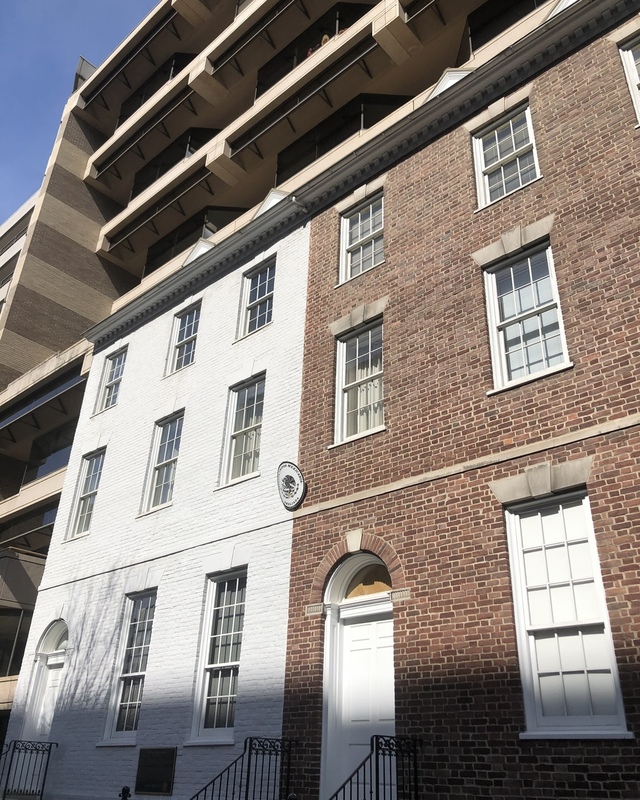
The Seven Buildings (1796 - 1960s): This block of Federal style buildings has largely been demolished and now houses, along with a modern addition, the Embassy of Mexico.
The remnants of this row of Federal style buildings date back to the 1790s. The Seven Buildings, which sit just northwest of the White House along Pennsylvania Avenue, figure extensively into the…
Washington Loan and Trust Company, 17th and G Streets Branch (1924-1974): A superb example of the Beaux-Arts and Italian Renaissance Revival styles, this commercial bank building’s demolition would lead to a stronger relationship between citizen preservation groups and future developments.
Built in 1924, the 17th and G Streets Branch of the Washington Loan & Trust Company was an outstanding example of Beaux-Arts and Italian Renaissance Revival styles. In fact, Arthur B. Heaton, the…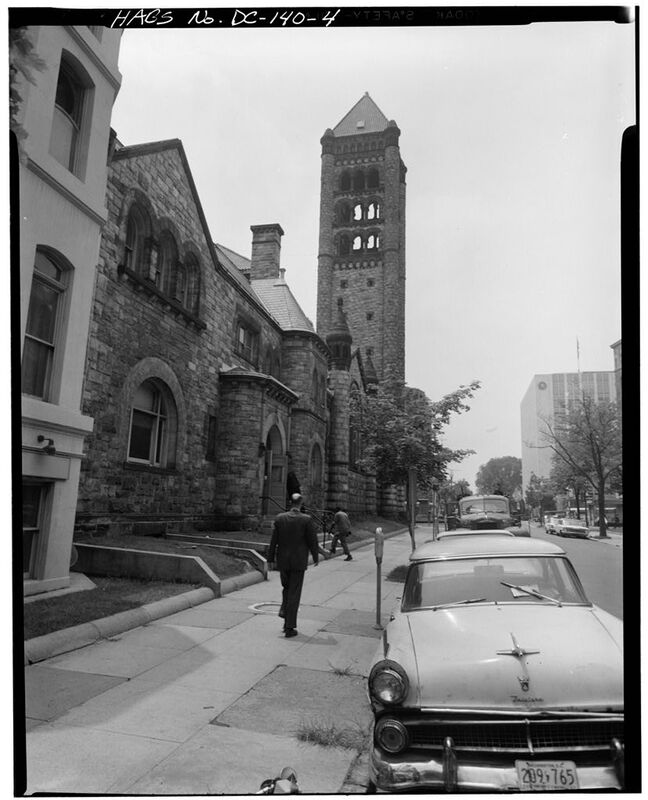
National Presbyterian Church (Church of the Covenant) (1887 - 1966): Fondly remembered as the “Church of the Government,” the Church of the Covenant served not only the community but offered solace and a place of worship to a few of America’s first families.
With J. Cleveland Cady as its architect, the Church of the Covenant (eventually named National Presbyterian Church) was the pinnacle of High Victorian taste. Cady’s design was based on Henry Hobson…
Third Church of Christ, Scientist, and Christian Science Monitor Building (1971-2014): The modernist church, office building, and plaza are notable as works of the office of I.M. Pei and Partners and principal designer Araldo Cossutta.
Built between 1968 and 1971, the modernist church, office building, and plaza at this site were designed primarily by principal architect Araldo Cossutta. A European-trained protégé of the famous…
Tuckerman House (1886-1967): This residence was demolished in 1967 to make way for the new headquarters of the Motion Picture Association of America.
Designed by the DC-based architectural firm of Hornblower & Marshall, the Tuckerman House featured red brick with smoothly cut red sandstone. The house was designed in a similar style to architect…
Rhodes' Tavern (1799-1984): The battle over the now-demolished Rhodes' Tavern demonstrates the tension between historic preservation and development interests in DC’s built environment.
Built in 1799 by Bennett Fenwick (ca.1765-1801)—and, most likely, his enslaved work force—Rhodes' Tavern opened as a tavern and inn in 1801 under the management of William Rhodes. In 1805, Rhodes sold…
Palais Royal (1893-1987): The popular department stores was among many in the downtown commercial district in the late 19th century.
Founded by Abram Lisner, Palais Royal expanded from its beginnings as a specialty store to a successful department store. Lisner operated the store as a cash-only business that offered low-price…
The Velatis Caramel Company (1866-1970): Velatis caramels continue to sell today, despite the demolition of the original downtown storefront in 1970.
Italian immigrant Salvator Velati opened the first Velatis candy shop in Richmond, Virginia, in the 1850s. This store burnt to the ground just prior to the end of the Civil War. In 1866, the Velatis…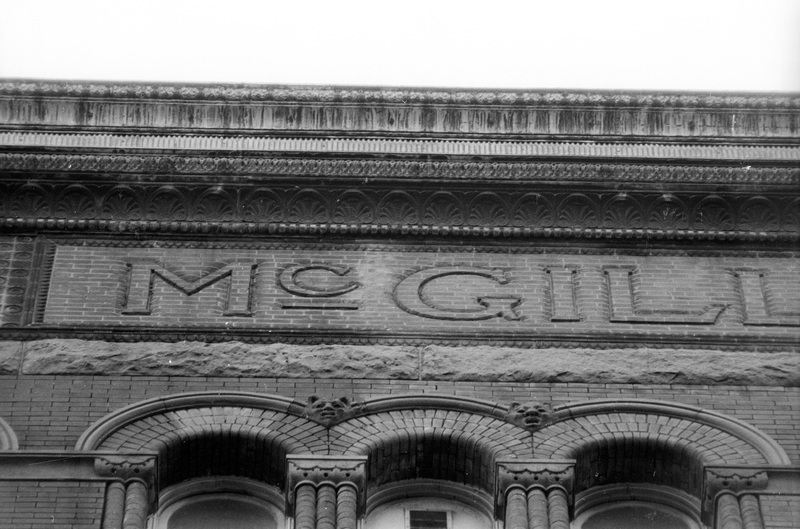
McGill Building (1891 - 1973): This Romanesque Revival style commercial building is notable in both construction and demolition.
Designed by Paul J. Pelz (1841-1918), this Romanesque Revival style building was demolished just as the plan to preserve it was beginning. Built in 1891, the McGill Building (named for Architect James…
Washington Lodge No. 15, The Benevolent and Protective Order of Elks (1906-1980): Washington Lodge No. 15 was home to the Benevolent and Protective Order of Elks, until the Beaux-Arts building was replaced by the old Washington Convention Center.
Washington Lodge No. 15 was home to the Benevolent and Protective Order of Elks (BPOE). Founded in 1868 as a social club, BPOE is similar to the Freemasons in rites, traditions, and regalia. Until…
Northern Liberty Market (1875-1985): Northern Liberty Market served as a market from 1875 to 1963, before the building was eventually left vacant and demolished in 1985.
The physical structure of Northern Liberty Market came as a result of the 1870s development initiatives of then DC governor, Alexander Shepherd (1835-1902). An earlier incarnation of Northern Liberty…
Paul Laurence Dunbar High School (1916-1977): Dunbar High School became the country's first public high school for African Americans, producing generations of Black leaders.
Founded in 1870 as the Preparatory High School for Colored Youth in the basement of the 15th Street Presbyterian Church, the school became the country's first public high school for African Americans.…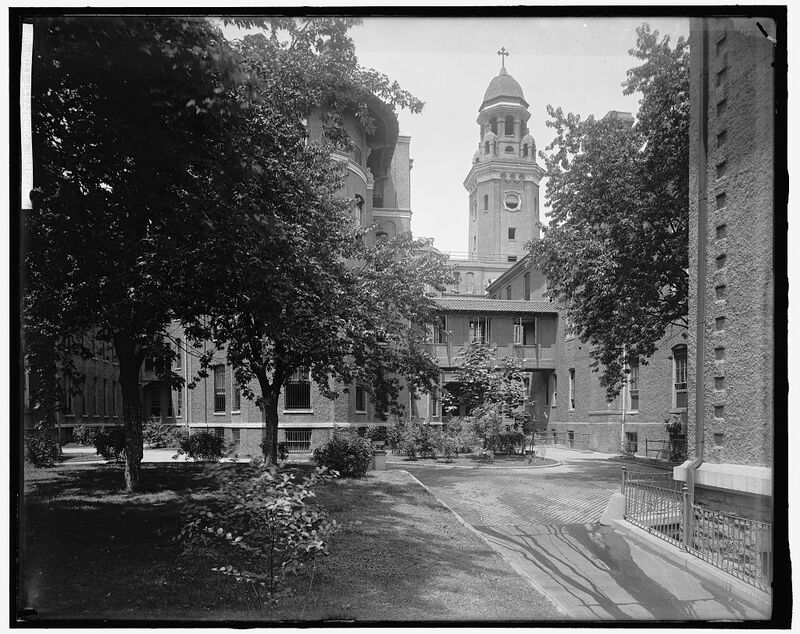
Providence Hospital (1861 - 1964): Founded at the very beginning of the Civil War, Providence Hospital cared for generations of Washingtonians.
Providence Hospital opened just six weeks after the start of the Civil War, and was one of the longest running hospitals in the city, operating from 1861 to 1961. Opening on the corner of Second and D…
Gallinger Municipal Hospital Psychopathic Ward (ca.1920-ca.1990): Gallinger Municipal Hospital Psychopathic Ward illustrates the local expansion of psychiatry beyond institutional walls.
Prior to 1900, the administration and distribution of humanitarian aid in DC was largely dependent on private philanthropic organizations who received federal aid to provide these services. The…
Dry Barn (1884-2022): Constructed during the 1880s, this important agricultural structure was destroyed in a fire in 2022.
Farming was an integral part in the treatment of patients at Saint Elizabeths. It also carried out the hospital's goal of producing as much of its own food as possible. During his time as the…
Burroughs Cottage (1891-2026): Originally built for a single patient in 1891, the Burroughs Cottage was an important example of Saint Elizabeths' "cottage plan" and how it benefited the daily lives and treatment of patients.
Although there were several single-family homes built at Saint Elizabeths for staff who lived on the site, only one was built for patient care. In 1886, Sarah Borrows, a patient from a wealthy…Tour curated by: DC Preservation League