Cemeteries of DC
This tour explores the cemeteries and burial grounds around the District.
Rock Creek Cemetery, the first cemetery in what would become the District of Columbia, was founded in 1719 and originally served as the burial ground of a small Anglican chapel. Still active today, Rock Creek Cemetery is now open to all religions.
Another burial ground founded prior to the official establishment of the District is the Montgomery Street Methodist Church cemetery. Though founded in 1772, burials did not begin at this cemetery until 1808. What made this cemetery unique for its time is that it allowed burials of both Black and white members of the church; however, these burials were still segregated by race. Later, the grounds of the cemetery split off from the church, as they were leased to a Black congregation: Mount Zion Methodist Episcopal. A portion of the grounds was then sold to the Female Union Band Society for the burial of their free Black members. The cemetery can still be found in Georgetown, though no new burials have been interred since 1950.
A cemetery unique to DC, as the nation's capital, is Congressional Cemetery. This cemetery, established in 1807 on Capitol Hill, served as the first national burial ground for elected officials. Today, the cemetery is open to all deceased, not only those who were once elected officials. Notable figures buried at the cemetery include former DC Mayor Marion Barry and former FBI Director J. Edgar Hoover. Additionally, Congressional Cemetery is one of the only cemeteries in the world to contain an LGBTQ+ section, known as “Gay Corner.” LGBTQ+ activists such as Leonard Matlovich, Frank Kameny, and Barbara Gittings are buried in this section.
In several of the District’s earliest cemeteries, maintenance was irregular and many lacked sufficient supervision. The continued growth and development of the city raised additional concerns related to density, contagion, and overcrowding of urban cemeteries. Because of these issues, legislation was passed in 1852 banning new burial grounds within the boundaries of the federal city. Soon, new cemeteries were founded outside of the city, in what was then Washington County, with many graves within the city boundaries being exhumed and moved.
During this time, the Rural Cemetery Movement was gaining traction. This movement, which influenced the development of public parks, altered the approach to the construction of cemeteries and advocated for them to be considered places of peace and tranquility. The cemeteries outside of the city’s boundaries emphasized space, maintenance, and sanitary measures as a way to reinvent what was considered a typical burial ground during the time. Oak Hill Cemetery, established in 1849 in Georgetown, adheres to rural cemetery principles.
It is also important to note that there were many cemeteries that once flourished, but are no longer active. One of these cemeteries was the Columbian Harmony Cemetery, which was located at 9th Street and Rhode Island Avenue NE. Between 1880 and 1920, Columbian Harmony was the most active Black cemetery in the city.
In 1959, the land was sold to developers, and the 37,000 burials were moved to a site in Prince George’s County, Maryland. However, the removal process was anything but orderly, as some headstones and bodies were dumped on the banks of the Potomac River as a way to prevent erosion. Additionally, many of the graves and bodies moved to the new cemetery in Landover, Maryland, remain unidentified, lost, and mislabeled. Today, the Rhode Island Avenue Metro Station sits on the former cemetery site, and a small plaque within the station marks the location of the one-time cemetery.
This tour can be completed by walking, public transport, and/or car. Since the cemeteries are spread out, it is advised that you map out your route to determine distance before beginning.
Sites 10
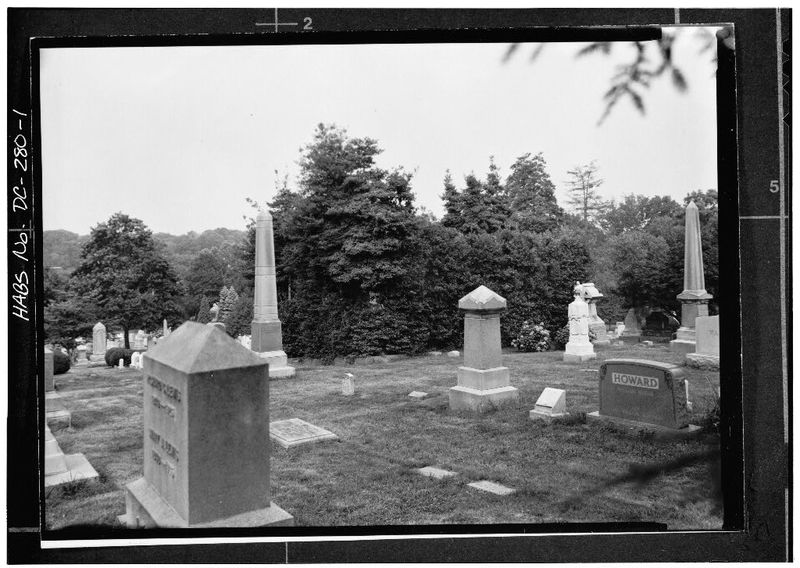
Rock Creek Church Yard and Cemetery: This large cemetery is the oldest public burial ground within the District of Columbia.
With graves dating back to the early 1770s, and pre-revolution burials, the Rock Creek Church Yard is a unique landscape in the District. With a variety of headstones, inscriptions, and decorative…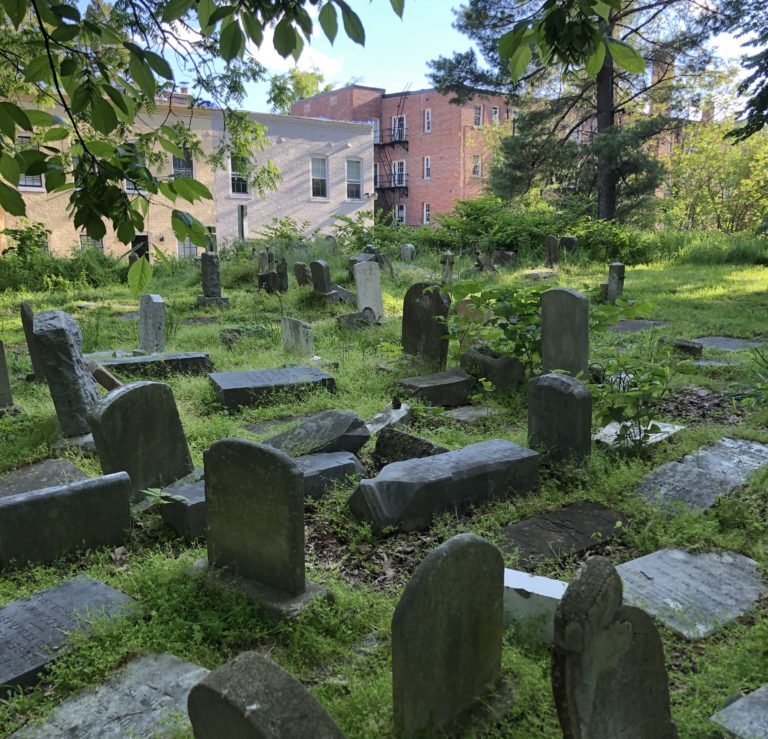
Mount Zion Cemetery (Methodist Episcopal Burying Grounds; Female Union Band Society Graveyard): This cemetery is one of the few remaining physical reminders of the significant contributions of Black people to the development of Georgetown.
Mount Zion Cemetery's history and that of the generations of African Americans, both free and enslaved, interred therein highlight life and evolving free African American culture in the District of…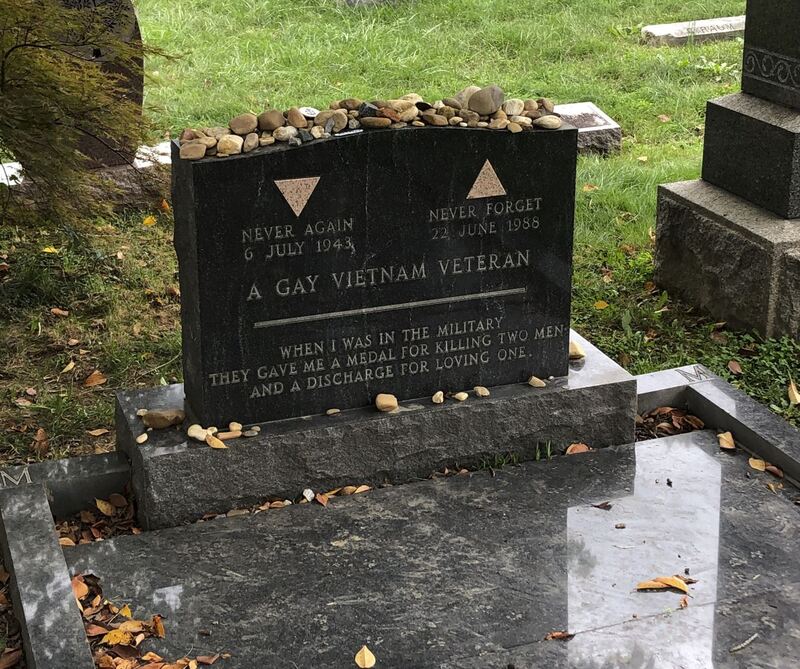
Congressional Cemetery Historic District: This graveyard is among the most notable resting places for early American historical figures and has since become important to the LGBTQ+ community.
The original four and one-half acre tract of Congressional Cemetery was purchased from the Government for $200 on April 4, 1807 as a private burial ground. On March 30, 1812, several years after…
Oak Hill Cemetery: Tucked into a corner of Georgetown, this cemetery exhibits beautiful landscaping, architecture, and is where some of the most notable figures in DC's history are buried.
Oak Hill Cemetery, an idea first put forward by notable Washington, DC, banker William Wilson Corcoran, is an example of picturesque landscape architecture – first popularized in early 18th century…
Glenwood Cemetery Historic District: Glenwood Cemetery is one of DC's longest-running cemeteries and its first for-profit graveyeard.
Chartered by Congress in 1852, Glenwood Cemetery was the first for-profit cemetery in the District, and among the first nationwide. This business model, initially disdained as disrespectful to the…
Methodist Cemetery: This one-acre plot in Tenleytown is one of the only surviving community cemeteries in Washington, DC.
Established as a community cemetery in 1855 by twelve residents of Tenleytown, this burial ground is a significant landscape that evokes the geography of early Washington, DC. Shaped as a rectangular…
Saint Elizabeths Hospital Cemeteries: Cemeteries on Saint Elizabeths' West and East campuses offer an important window into the hospital's history.
The oldest burial ground at Saint Elizabeths was created in 1856 on the wooded western slope of the West Campus. In most cases, funeral arrangements for patients who dies at Saint Elizabeths were…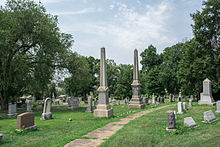
Prospect Hill Cemetery: Prospect Hill Cemetery was founded in 1858 by the German Evangelical Society, a men’s organization from Concordia Church.
Prospect Hill Cemetery grew quickly upon its establishment in 1858 by the German Evangelical Society, a men’s organization from Concordia Church. As with other cemeteries at the time, District law…
Battleground National Cemetery: Here lies fallen Union soldiers from the 1864 Battle of Fort Stevens.
In July 1864, the Battle of Fort Stevens marked the defeat of Confederate General Jubal Anderson Early’s campaign to launch an offensive attack on the national capital. During the battle, 59 Union…
Woodlawn Cemetery: Established in 1895, this non-denominational, integrated cemetery was one of the most prestigious burying grounds for Black Washingtonians until the 1930s.
Woodlawn Cemetery is situated on a gently sloping plateau and is defined by hills, winding avenues, and diverse vegetation, as well as the panoramic views it offers of the District of Columbia's…Tour curated by: DC Preservation League