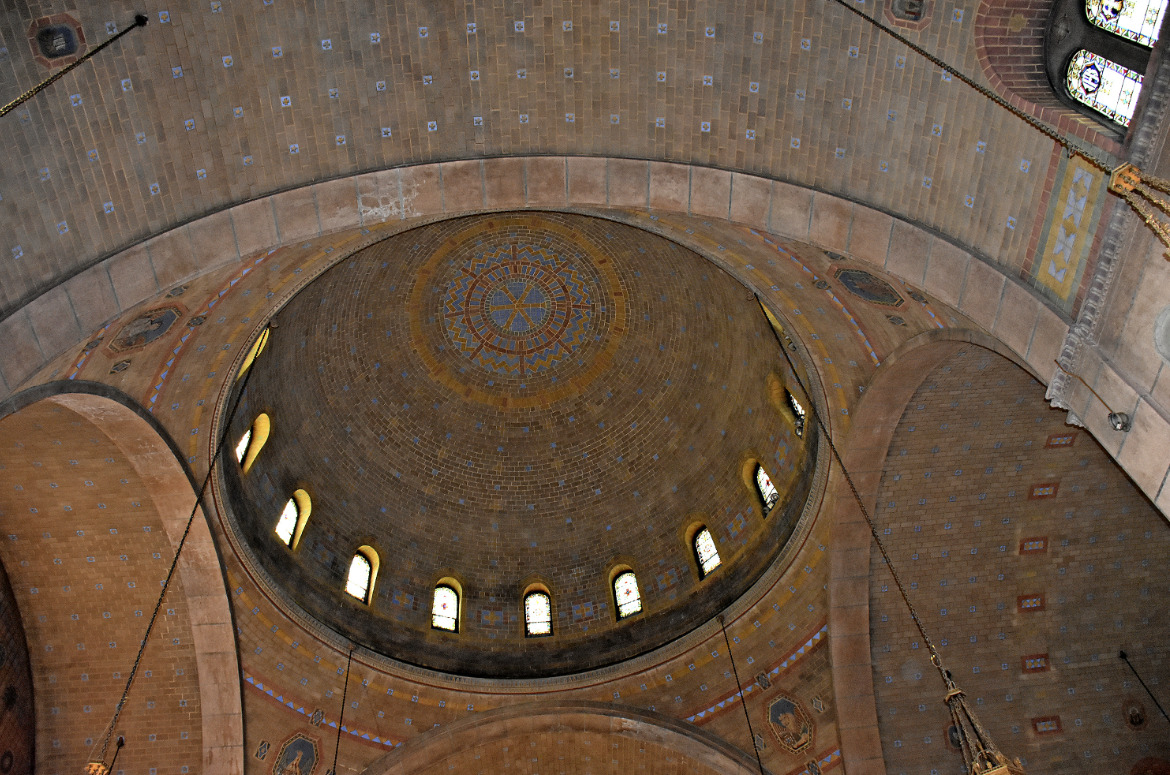
Shrine of the Sacred Heart (including Interior): This parish has been described as “one of the most culturally diverse congregations in the Archdiocese of Washington.”
Text
Shrine of the Sacred Heart, located just off 16th Street NW at Park Road, is a monumental religious space with a century of significant social history.
The church was dedicated in December 1922 after nearly two years of construction. This was the second Sacred Heart Church, as the first was located nearby at approximately 14th Street and Park Road NW. The original Gothic Revival style church, completed in 1902, was meant to be a temporary location for the parish, as fundraising for a larger and grander church continued.
The 1922 church building features a Latin Cross plan, and was designed by Frederick V. Murphy of Murphy & Olmsted (with Maginnis & Walsh as associate architects) in a Northern Italian Romanesque Revival and Byzantine-Romanesque style. The Byzantine influence is most visible in the church's central dome and interior design.
The white limestone-clad church includes a prominent arcaded portico of granite columns on its primary facade (west elevation). Here, the main entrance faces a memorial park and 16th Street NW. Above this entrance is a rose window. Just south of the church is a three-story rectory, designed in a similar style to the church, which houses the pastor's residence, as well as office, meeting, and event spaces.
The church's interior sanctuary, which has been historically designated, features concrete mosaics and murals, which are the work of "architectural sculptor" John J. Earley — who lived nearby in Mount Pleasant. Following his work at Sacred Heart Church, Earley would design other church interiors. The church houses a large organ, built by Casavant Frères, which was said to be the city's largest prior to the installation of the Kennedy Center's organ.
In 1948, Cardinal Patrick O’Boyle became the first archbishop of the newly-established Archdiocese of Washington. Archbishop O’Boyle was committed to desegregation within the archdiocese’s parishes and parochial schools. However, the integration of churches like Sacred Heart was not immediate and many Black congregants continued to face discrimination and prejudice.
Simultaneously, during this postwar period, Washington’s Latino population began to increase, particularly in the Mount Pleasant and Columbia Heights neighborhoods. In turn, more Latinos began to attend services at Sacred Heart Church. Thus, Reverend Augustín R. Martínez was hired in 1956, and the church’s bilingual programming expanded. Martínez would eventually serve as associate pastor.
Two decades later, in 1976, Father Joaquin A. Bazan would become the church’s first Latino Pastor. During Father Bazan’s tenure, the annual Easter procession through the surrounding neighborhood was instituted. The procession, which celebrates Good Friday with a Drama of the Passion performed in Spanish, continues to this day.
Over the decades, Sacred Heart Church became an important institution and social space within Washington, as illustrated by its role during times of upheaval. During both the 1968 and 1991 riots, the shrine served as a community center, providing food and refuge.
Sacred Heart Church continued to expand its programming, with Father Peter Long offering a Sunday Mass in Vietnamese and Father O’Malley offering a mass in French Creole for Haitian parishioners. The parish has been described as “one of the most culturally diverse congregations in the Archdiocese of Washington.”
DC Inventory: November 8, 1964 (Joint Committee on Landmarks)
DC Inventory (Interior Sanctuary): February 26, 2026
National Register: July 30, 2026
Files
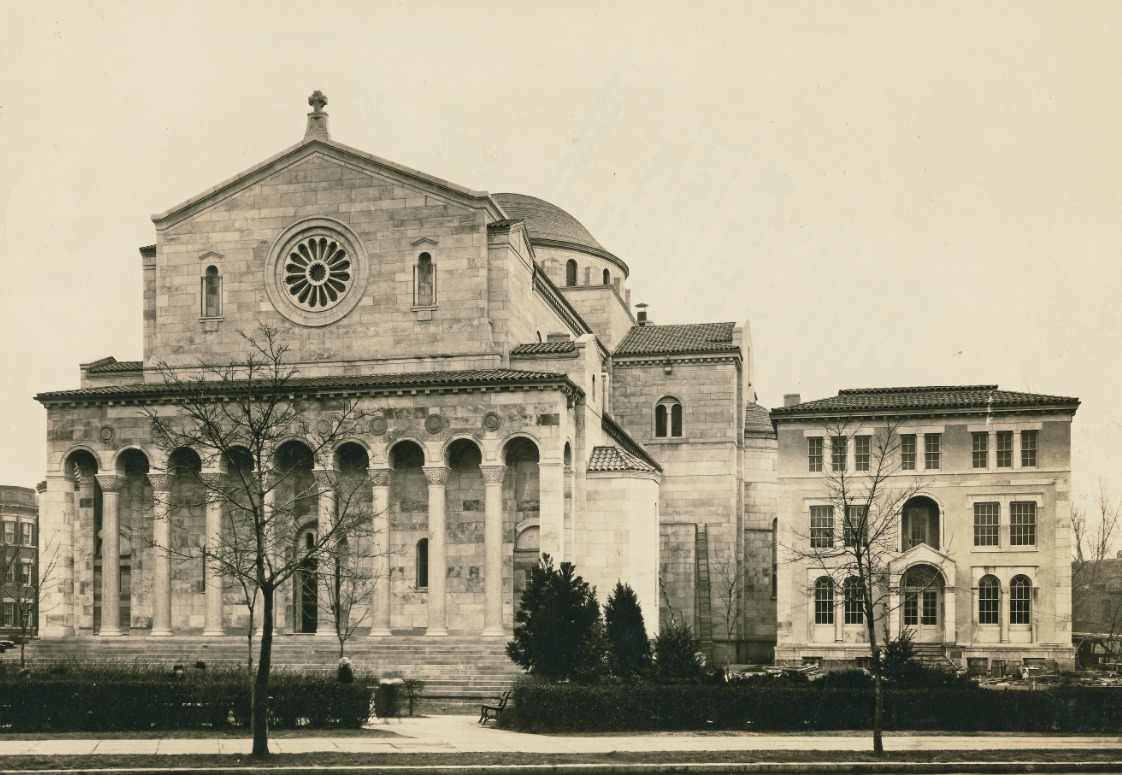
Shrine of the Sacred Heart main façade/west elevation
Source: National Register Nomination Form | Date: December 1922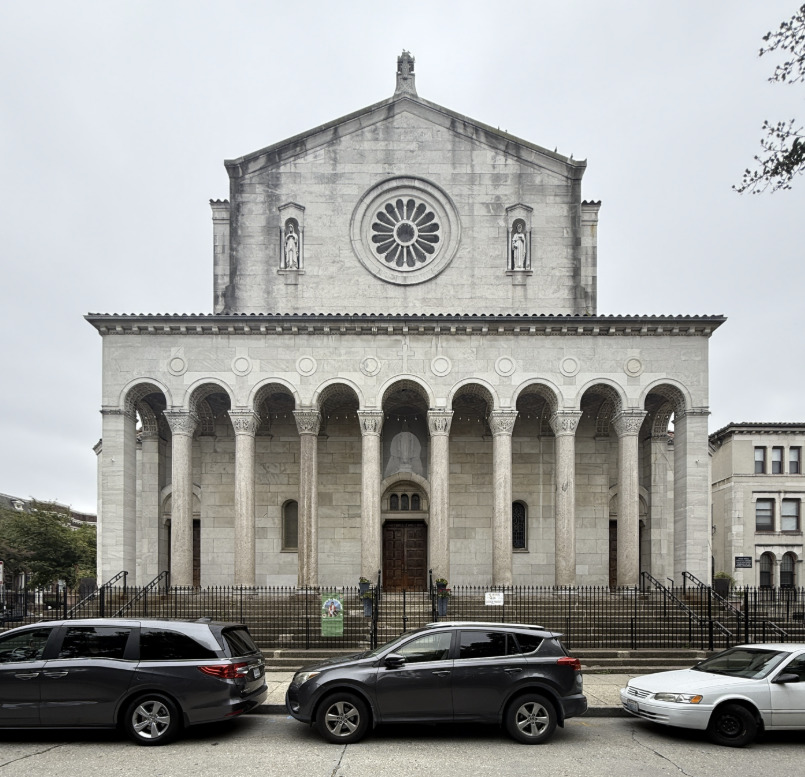
Shrine of the Sacred Heart main façade/west elevation
Source: National Register Nomination Form | Date: August 2025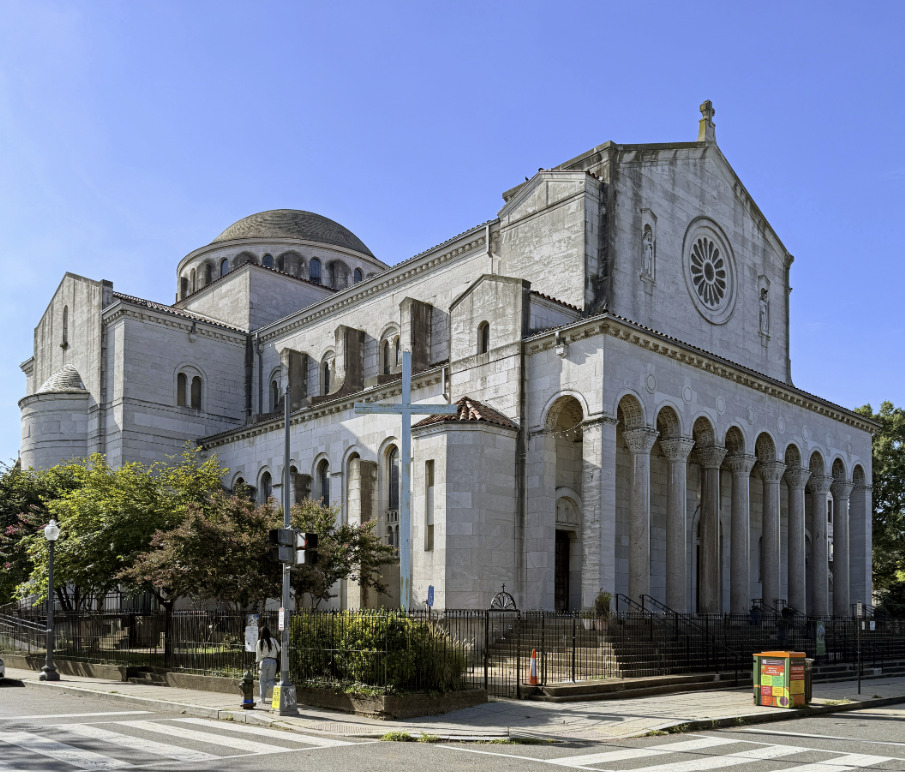
North and west elevations
Source: National Register Nomination Form | Date: August 2025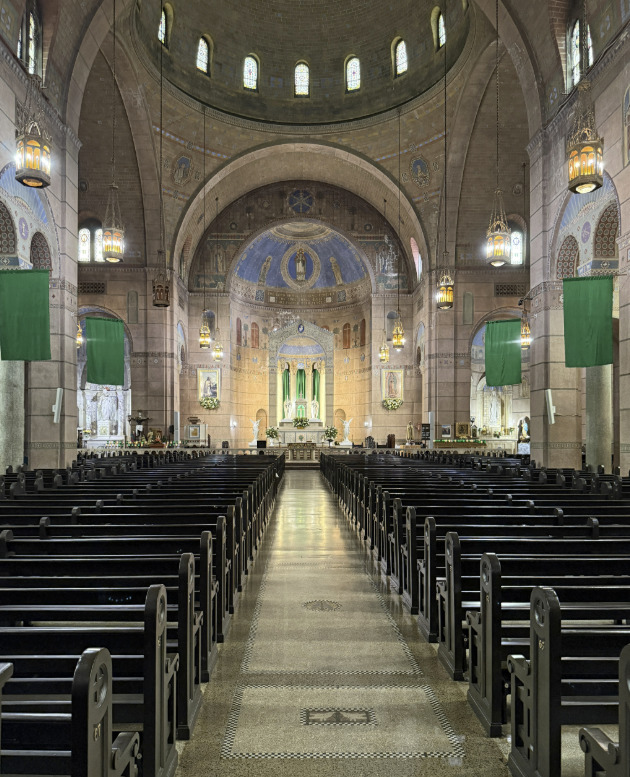
Nave Looking East To Sanctuary
Source: National Register Nomination Form | Date: September 2025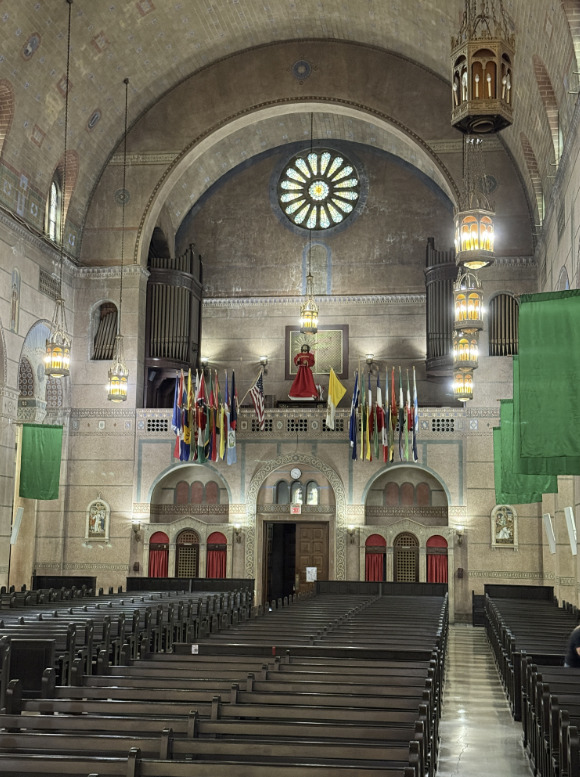
Nave Looking West Toward Narthex Wall
Source: National Register Nomination Form | Date: September 2025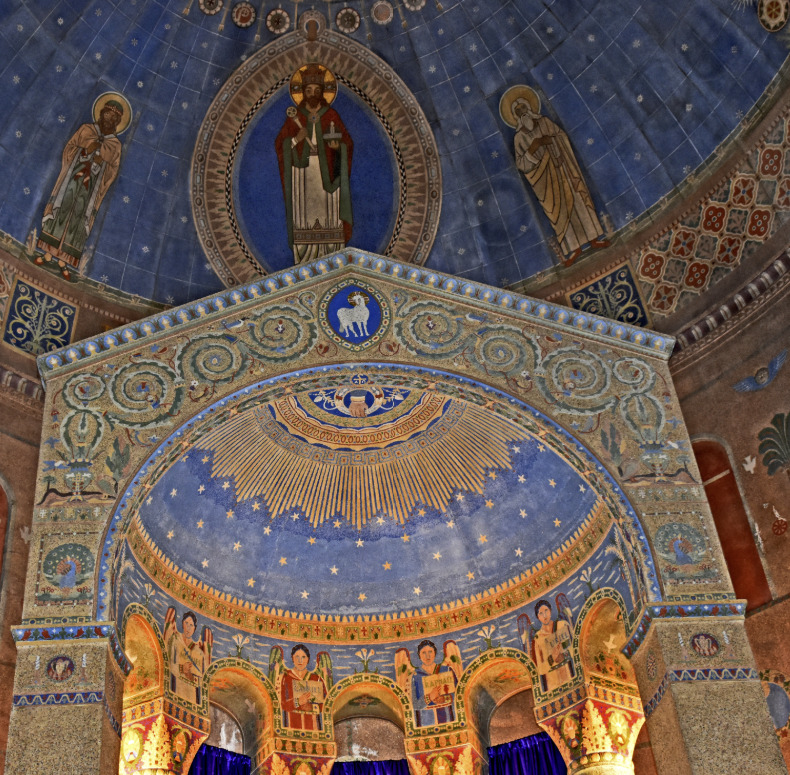
Detail of baldachin and apse ceiling over main alter
Source: National Register Nomination Form | Date: April 2025