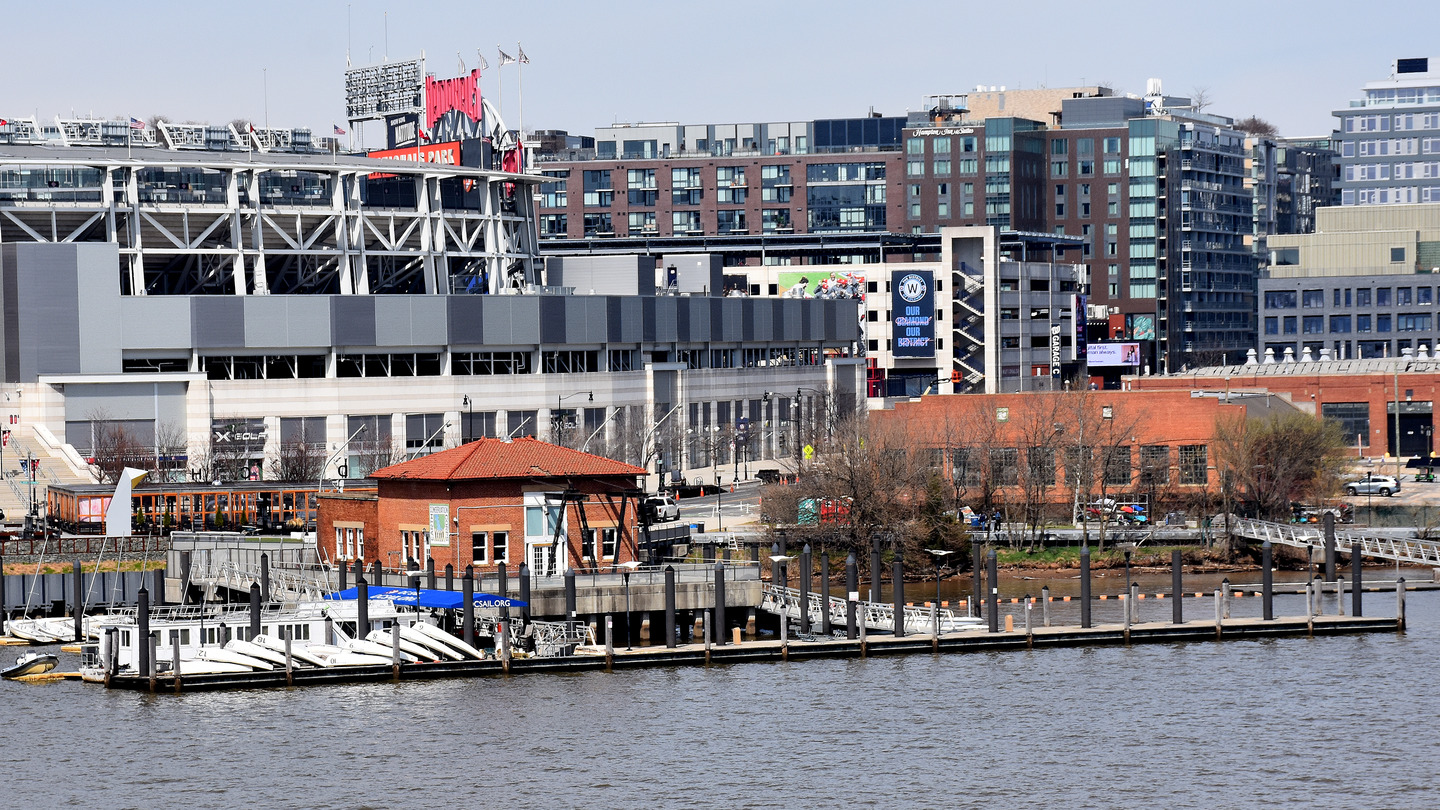
Capitol Power Plant Pump House: Since 1993, the former pump house has been used by Earth Conservation Corps, a non-profit devoted to youth development and protecting the environment.
Text
The Capitol Power Plant Pump House was completed in 1910 to provide water for the Capitol Power Plant, also completed in 1910, approximately 1 mile north at E Street and New Jersey Avenue SE. The pump house's water was used for the power plant's coal-fired boilers — with coal delivered via the nearby railroad line. This steam power provided electricity and heat for the U.S. Capitol Building, Senate and House office buildings, and Library of Congress (Jefferson Building).
Within a short period of time, new tunnels were constructed, expanding the electricity and heat to additional buildings, including Union Station. Demand for air conditioning in the 1930s led to the construction of an addition to the pump house in 1935, as well as an expansion of the power plant.
Nonetheless, starting in the 1950s, the pump house became obsolete, as the US Capitol Complex opted for electrical power from PEPCO and municipal water. In 1961, the pump house was transferred to the DC Government, where it sat abandoned until the early 1990s.
Since 1993, the former pump house has been used by Earth Conservation Corps (ECC), a non-profit devoted to youth development and protecting the environment, specifically the Anacostia River and other area watersheds. This organization, established in 1989, provides opportunities for District residents between the ages of 17 and 25. In 1993, ECC collaborated with Mayor Marion Barry and his administration to obtain a lease on the building. Prior to ECC moving in, the U.S. Navy Seabees stabilized and rehabilitated the once-industrial building, allowing it to become the community anchor and nature center it is today. At the time, a concrete platform was added. Murals were also added in the 1990s.
For more than 30 years, ECC has engaged youth through its environmental initiatives and programming. ECC members, interns, and volunteers have helped clean up and restore the once polluted and neglected river.
The former pump house, since renamed the Monique Johnson Anacostia River Center (Johnson was a founding ECC member), is a successful example of adaptive reuse along the river. Over the years, the Monique Johnson Center has helped facilitate many public and private partnerships, including with Anacostia Riverkeeper. The building is managed by the DC Department of Parks & Recreation.
The former pump house sits just off shore, above the Anacostia River. The building, which is connected to Diamond Teague Park and the Anacostia Riverwalk Trail by a pier, is supported by pilings encased in a concrete foundation.
The one-story building is constructed of brick masonry and composed of two sections: the original 1910 building facing the river, with a hip-roof clad in terra-cotta tile, and the 1935 addition facing the shore, slightly shorter with a flat-roof. The original building is more ornate than the addition and was influenced by the Mediterranean Revival style.
The 1910 portion also had a tall opening that allowed for machinery and equipment to be taken in and out of the interior space. This former opening is visible on the south elevation, facing the river, and has been replaced by a doorway and two large windows. A hoist system is still visible, illustrating the building's once industrial use.
DC Inventory: March 26, 2026
National Register: May 27, 2026
Files
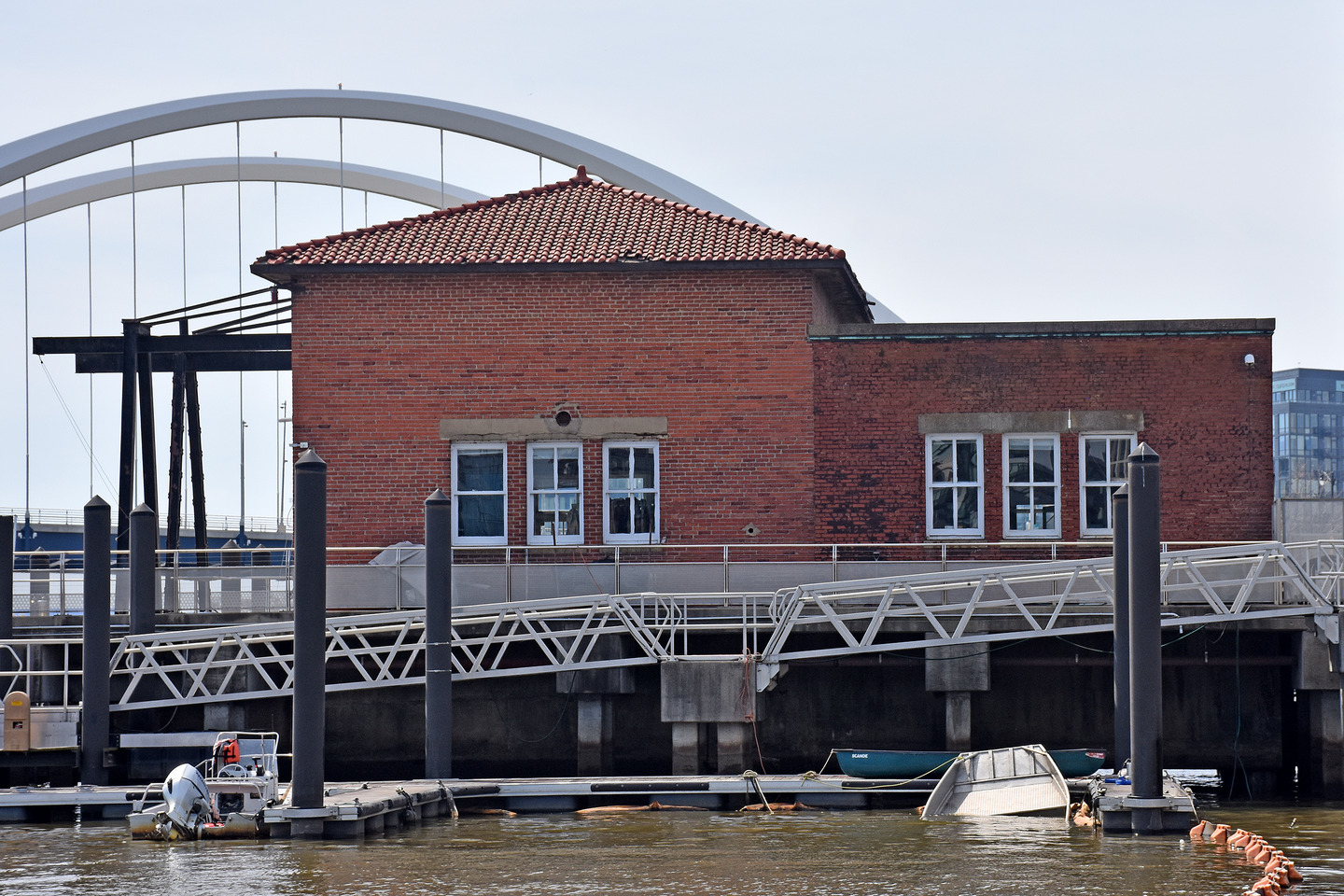
CPP Pump House, East Façade.
Source: DC Preservation League | Date: 2026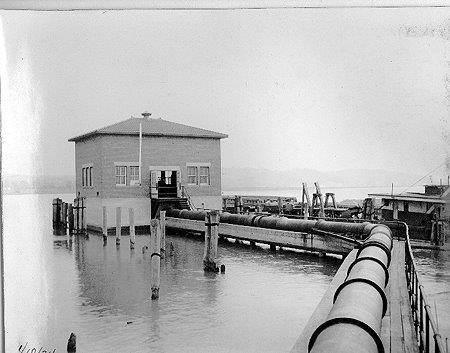
CPP Pump House, Land-side Facade.
Source: Architect of the Capitol | Date: 1935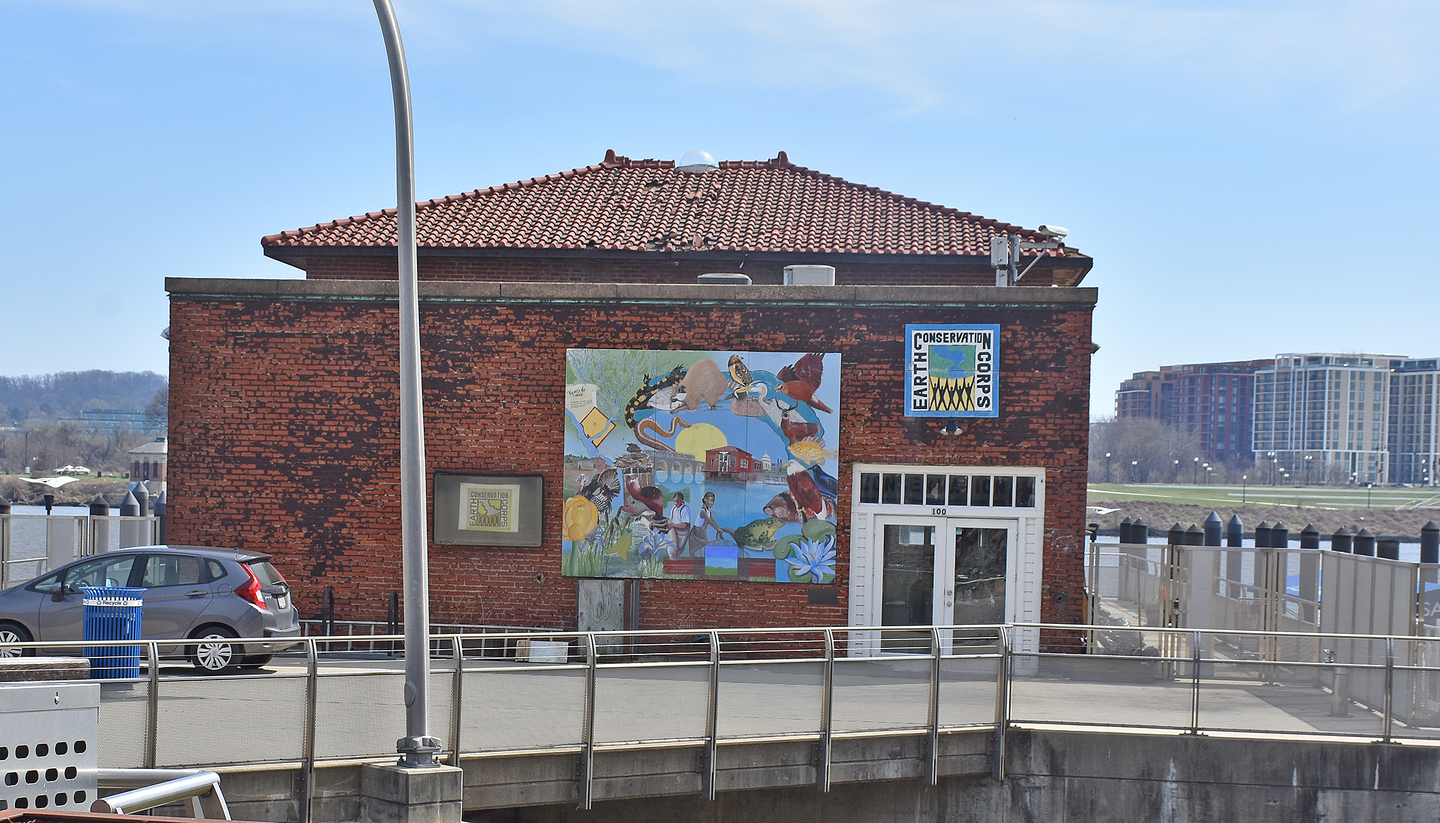
CPP Pump House, Land-side Facade.
Source: DC Preservation League | Date: 2026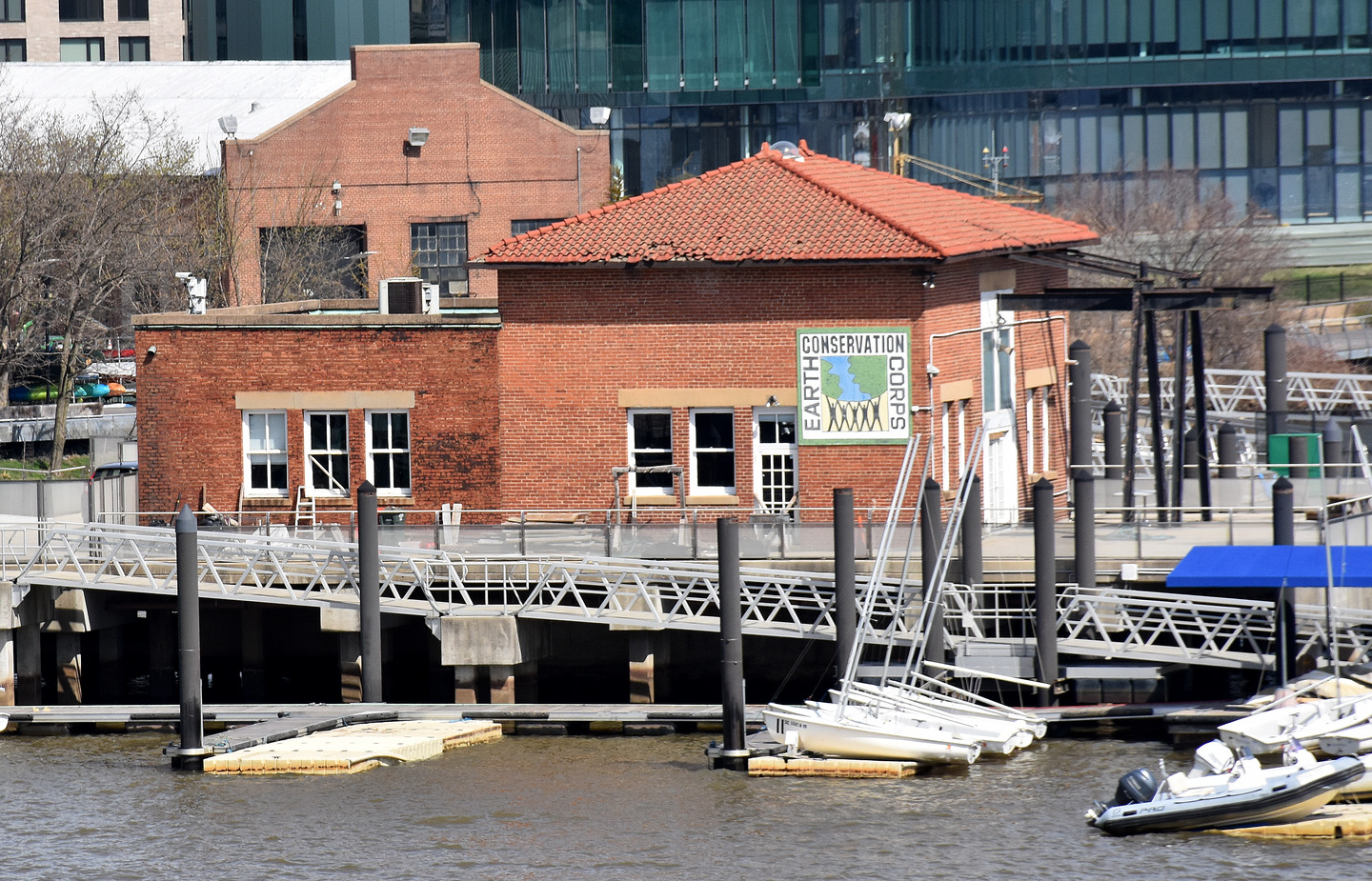
CPP Pump House, West Façade.
Source: DC Preservation League | Date: 2026