National Historic Landmarks: Capitol Hill
Capitol Hill is well-known as the neighborhood of Speakers of the House, United States Senators, and Supreme Court Justices. Its long and varied history has contributed to its designation as a historic district, and has enabled numerous properties to become nationally-recognized landmarks.
This tour is a collection of National Historic Landmarks (NHLs) in the Capitol Hill neighborhood of Washington, D.C., From Navy Yard to the Supreme Court, this tour explores historic properties with national significance. Consider how these sites connect to the story of America, and what nationally-significant sites along the way may be missing. This tour can be completed by walking, public transport, or car. It is advised to map out your route to determine distance before beginning.
NHLs are ultimately designated by the Secretary of the Interior, upon the recommendation of the National Park System Advisory Board, and are evaluated based on their history, integrity of the property, and their value to the broader American historical narrative. There are currently around 2,600 NHLs, with 78 in the District alone.
Sites 9

Sewall-Belmont House National Historic Site: This National Historic Site and National Monument served as the headquarters for the National Woman's Party for nearly 90 years.
The Sewall–Belmont House National Historic Site served as the headquarters for the National Woman's Party (NWP) for nearly 90 years, starting in 1929. Originally founded by Alice Paul and Lucy Burns…
Mountjoy Bayly House: This early Capitol Hill residence has long been a site of progressive reform and organizing.
The Mountjoy Bayly House (also known as the Bayly House, Hiram W. Johnson House, Chaplains Memorial Building, and Parkington) was built in 1822 for the second Sergeant at Arms of the Senate, General…
Supreme Court Building: The Supreme Court Building stands as a testament to the nation's dedication to justice and the independence of the judiciary.
When the seat of the federal government moved to DC in 1800, no provision was made for housing for the Supreme Court—a problem that wouldn’t be permanently resolved for 135 years.Less than two weeks…
The United States Capitol: The centerpiece of the Federal City crowns the hill L’Enfant described as “a pedestal waiting for a monument.”
The Capitol is both the seat of government and the symbol of the United States. It has been occupied continuously by Congress since 1800 (excepting one brief interruption), and until 1935 it housed…
Library of Congress (Jefferson Building): Established in 1800, the Library of Congress ranks as one of the largest and finest libraries in the world.
Founded in 1880, the original Library of Congress collection included 740 books and three maps. This collection lived in the Capitol until 1814, when invading British troops burned the Capitol and…
Marine Corps Commandant's House: The Commandant’s House is part of the nation's oldest continuously active Marine Corps installation.
Designed by George Hadfield (1763-1826), the Marine Corps Commandant’s House is the only original building on the complex. This white-painted, Flemish-bonded brick residence has served as the home of…
Washington Navy Yard Historic District: An important site for naval operations, the Washington Navy Yard's growth reflects the history of American naval conflicts.
The nation's first naval yard and first home port began development in 1799 and eventually became the center for naval operations during a critical period of expanding nationalism in the early 19th…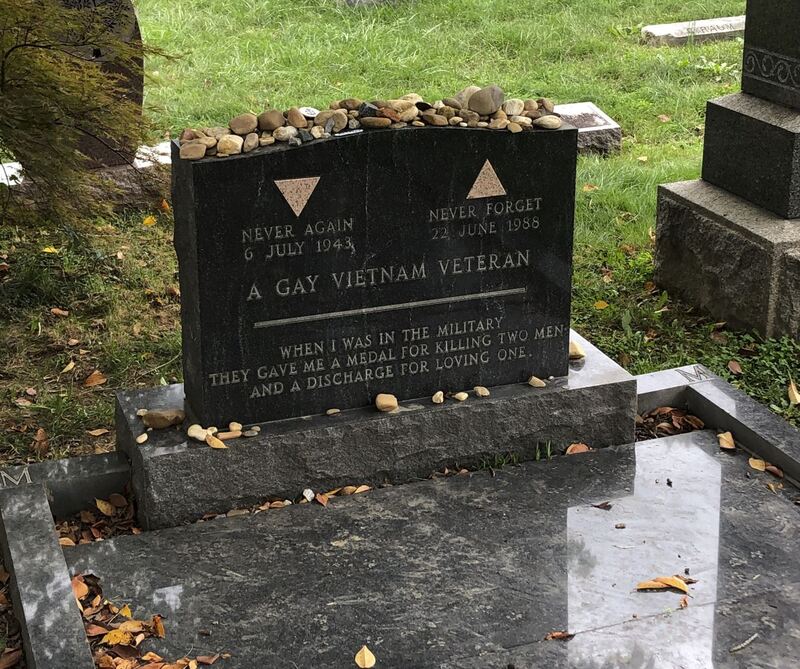
Congressional Cemetery Historic District: This graveyard is among the most notable resting places for early American historical figures and has since become important to the LGBTQ+ community.
The original four and one-half acre tract of Congressional Cemetery was purchased from the Government for $200 on April 4, 1807 as a private burial ground. On March 30, 1812, several years after…
The Furies Collective: This landmark is directly connected with the early expression and definition of the character, role, and ideology of the lesbian community in DC.
The row house at 219 11th Street SE, historically home to the Furies Collective, is a two-story, early 20th-century brick dwelling located in the Capitol Hill Historic District. Built in 1913, the…Tour curated by: DC Preservation League