Marist College (Marist Hall): This Romanesque Revival style building on the campus of the Catholic University of America is one of many historic seminaries in Brookland’s “Little Rome.”
Text
Marist Hall began as Marist College and served as a hub of advanced studies for the Society of Mary, one of the earliest Roman Catholic religious orders. The Society of Mary was legally incorporated in DC in 1896 with the goal of training young men in theology, philosophy, canonical law, priesthood, and missionary work. The Society of Mary’s first permanent administrative center and house of studies was Brookland’s historic Brooks Mansion.
Marist College was constructed just four years later, opening in 1900. Along with Holy Cross College (now known as O’Boyle Hall, 1899), Marist College was one of the first purpose-built seminaries to affiliate with the Catholic University of America. It embodies the goals and aspirations of the Society of Mary – to enhance Catholic education in partnership with the Catholic University of America, which was founded in 1887.
Marist College was designed in the Romanesque Revival style by Lemuel W. Norris, an esteemed architect who later worked for the DC Office of the Building Inspector and the Office of the Municipal Architect. Norris was also one of three architects who designed some of the first buildings for the Catholic University of America and its affiliated orders. Many Catholic institutions were established near the campus, giving Brookland the nickname of “Little Rome.” Marist College was sited atop a high ridge directly north of the then-campus.
Enrollment at Marist College grew steadily until the early 1960s, but a sharp decline the following decade left much of the building vacant. The neighboring Catholic University, however, was growing rapidly and needed space. Thus, in 1975, the Marists and Catholic University agreed to a trade. Marist College would be transferred to the university and become Marist Hall in exchange for nearby real estate. Marist Hall became an integral academic building at the university, thanks to its location and legacy as a meeting place for students and faculty. Until the mid-2010s, Marist Hall housed large classrooms and around 70-80 faculty offices. Other than minor exterior repairs, Marist College remained largely untouched between 1900 and 1975. Following its acquisition by Catholic University, the interior of the building underwent extensive renovation.
DC Inventory: July 24, 2025
National Register: September 22, 2025
Files

Front (south) elevation
Source: John DeFerrari, 2022
Marist College as seen from the southeast, shortly after its construction. Note the active farmland.
Source: Archives of the Society of Mary, U.S. Province, Atlanta, Georgia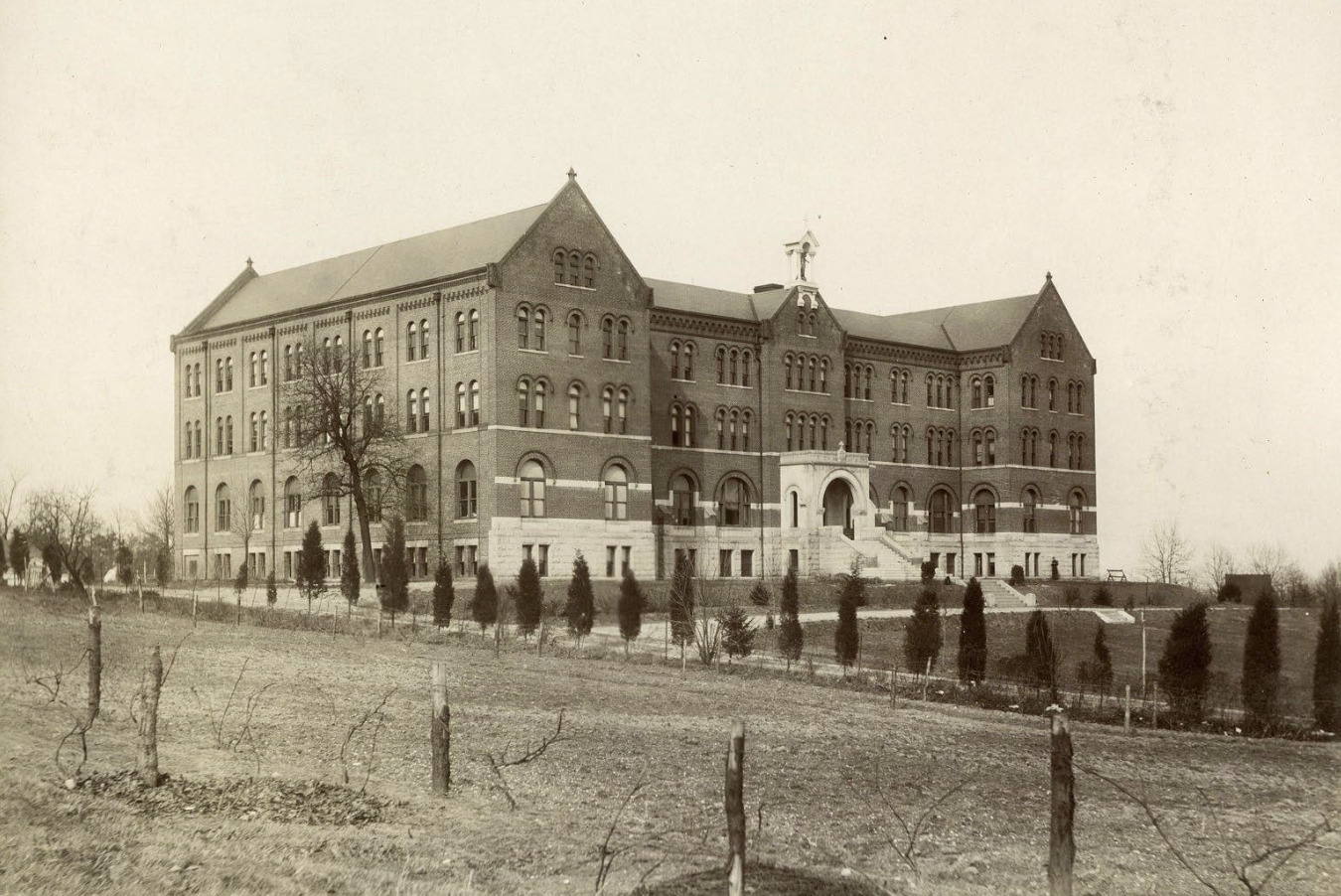
Marist College as seen from the southwest, around the time of its construction.
Source: Special Collections, The Catholic University of America, Washington, DC.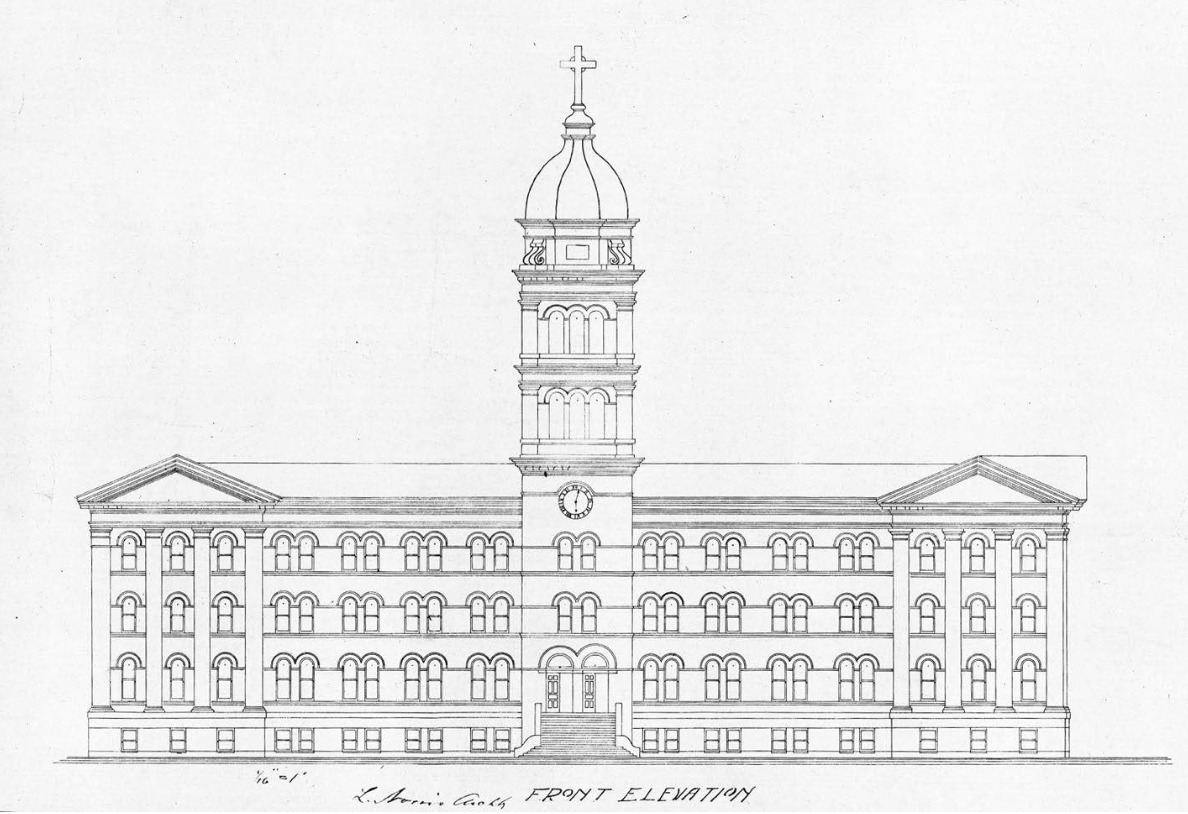
Proposed front elevation for Marist College (unbuilt), signed L. Norris Arch.
Source: Archives of the Society of Mary, U.S. Province.