Greyhound Bus Terminal (including Interior Lobby and Waiting Room): This Streamline Moderne former bus terminal is notable for both its design and its role in the Freedom Rides.
Text
The Greyhound Bus Terminal, completed in 1940, is a classic Art Deco/Streamline Moderne landmark, with a design aesthetic that epitomizes the promise of the industrial age as the hope for the future. The stepped central tower facing New York Avenue NW, a typical "ziggurat" design, exudes freshness and optimism, with its clean, triumphal lines. The clear planar and curvilinear forms with smooth surfaces also suggest the speed with which Greyhound's Super Coaches were to whisk patrons to their destinations.
DC's Greyhound Bus Terminal is the work of William Strudwick Arrasmith (Wischmeyer, Arrasmith & Elswick Architects) of Louisville, Kentucky, who designed more than 25 Greyhound bus terminals between 1937 and 1950. The building features quintessential materials of the Streamline Moderne style, including limestone, glazed brick, glass block, aluminum, formica, and terrazzo.
For more than 40 years, from 1940 to 1987, the Greyhound Bus Terminal was an important transportation hub for the city, especially during the years of World War II. In April 1947, following the U.S. Supreme Court decision in Morgan v. Virginia, which invalidated state laws that enforced segregation on interstate transportation, the "Journey of Reconciliation" — led by civil rights activist Bayard Rustin, and co-sponsored by the Congress of Racial Equality (CORE) and the Fellowship of Reconciliation (FOR) — departed from the terminal.
Most famously, the terminal served as one of two departure points in DC for the 1961 Freedom Rides, also sponsored by CORE. Intended to test the enforcement of the U.S. Supreme Court decisions that had ruled bus segregation unconstitutional, a bus departing from this station, as well as one departing from the nearby Trailways station, took Black and white riders through several Southern states. With interracial pairs sitting together in the bus seats and Black riders stationed at the front of the bus, the rides did not encounter trouble as they departed DC, but as they traveled further south, the Freedom Riders faced mobs and organized violence. The Freedom Rides became a significant moment for the Civil Rights Movement.
Threatened with demolition after its closure in 1987, the Greyhound Bus Terminal was saved by preservationists from the DC Preservation League, the Art Deco Society of Washington, and the Committee of 100 on the Federal City, who mobilized quickly and successfully to have the building added to the DC Inventory of Historic Sites that same year.
Notably, in an effort to "modernize," the terminal's exterior had been enclosed with a slipcover of cement-asbestos wall and metal mansard roof panels in 1976. Preservationists successfully argued that the slipcover had been added with minimal impact to the original exterior, and that once the slipcover was removed the streamlined design of 1940 would be found.
Today, the former terminal serves as the entrance pavilion to a 12-story office building completed in 1991. During the late 1980s and early 1990s, the historic landmark's exterior, and interior lobby and waiting room were restored by architect Hyman Myers. The historic landmark designation was extended to the interior lobby and waiting room in 2025, with a new period of significance that extends from the terminal's opening in 1940 to the completion of the restoration in 1991.
DC Inventory: March 4, 1987
DC Inventory (Amendment, including Interior Lobby and Waiting Room): November 20, 2025
Files

Restored façade of the Greyhound Terminal, facing southeast
Source: National Register Nomination Form | Date: July 2011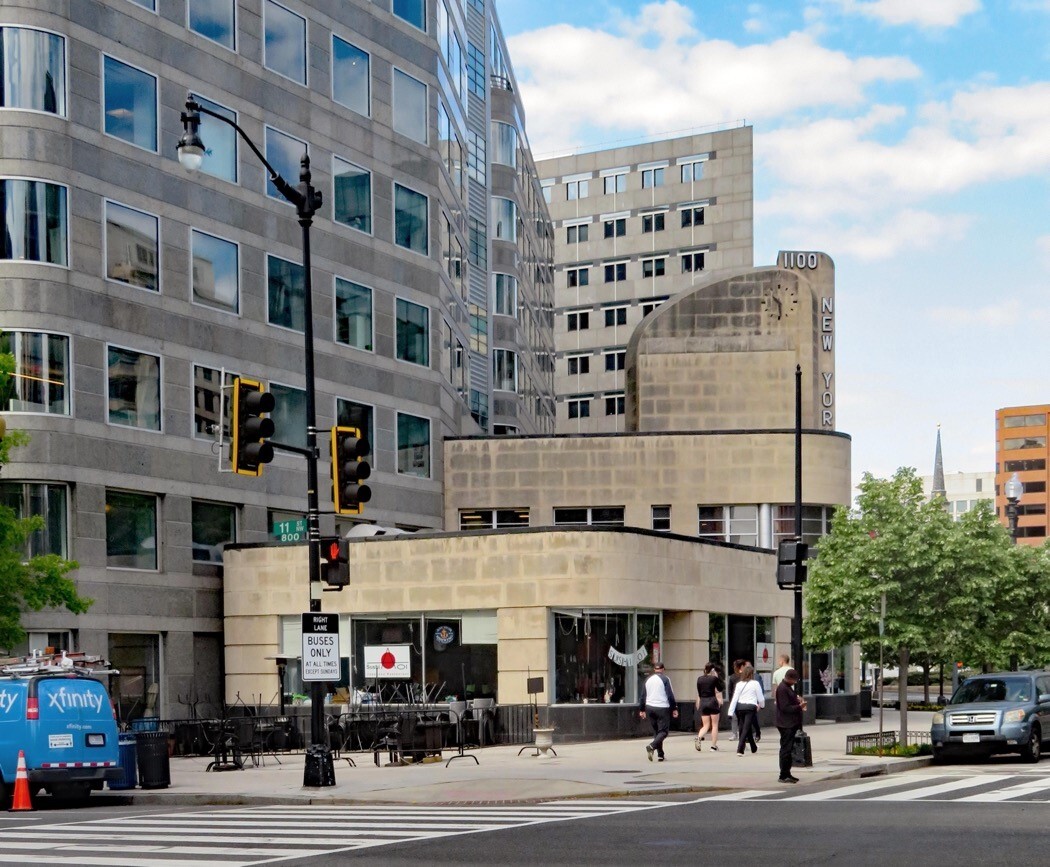
Greyhound Terminal east elevation and 1991 office building, facing west
Source: National Register Nomination Form | Date: April 2024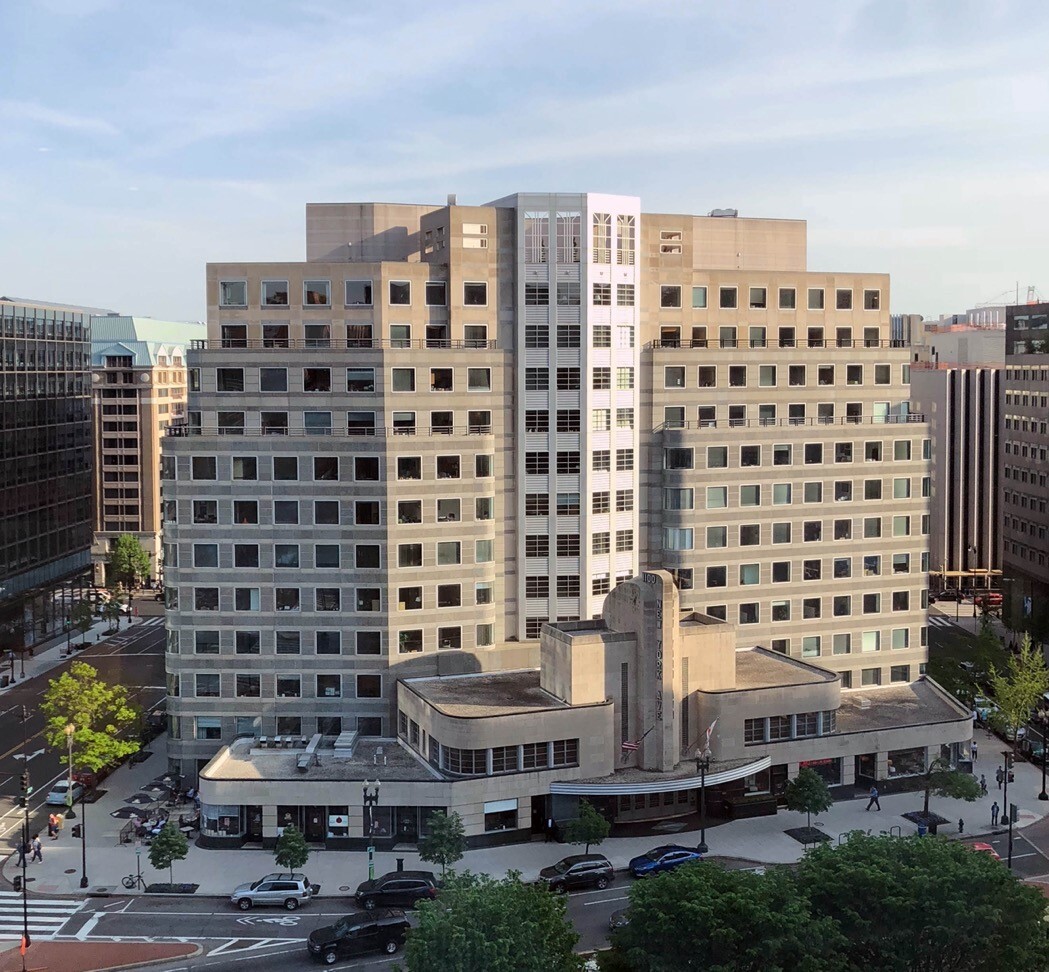
Greyhound Terminal and 1991 office building facing south
Source: National Register Nomination Form | Date: May 2018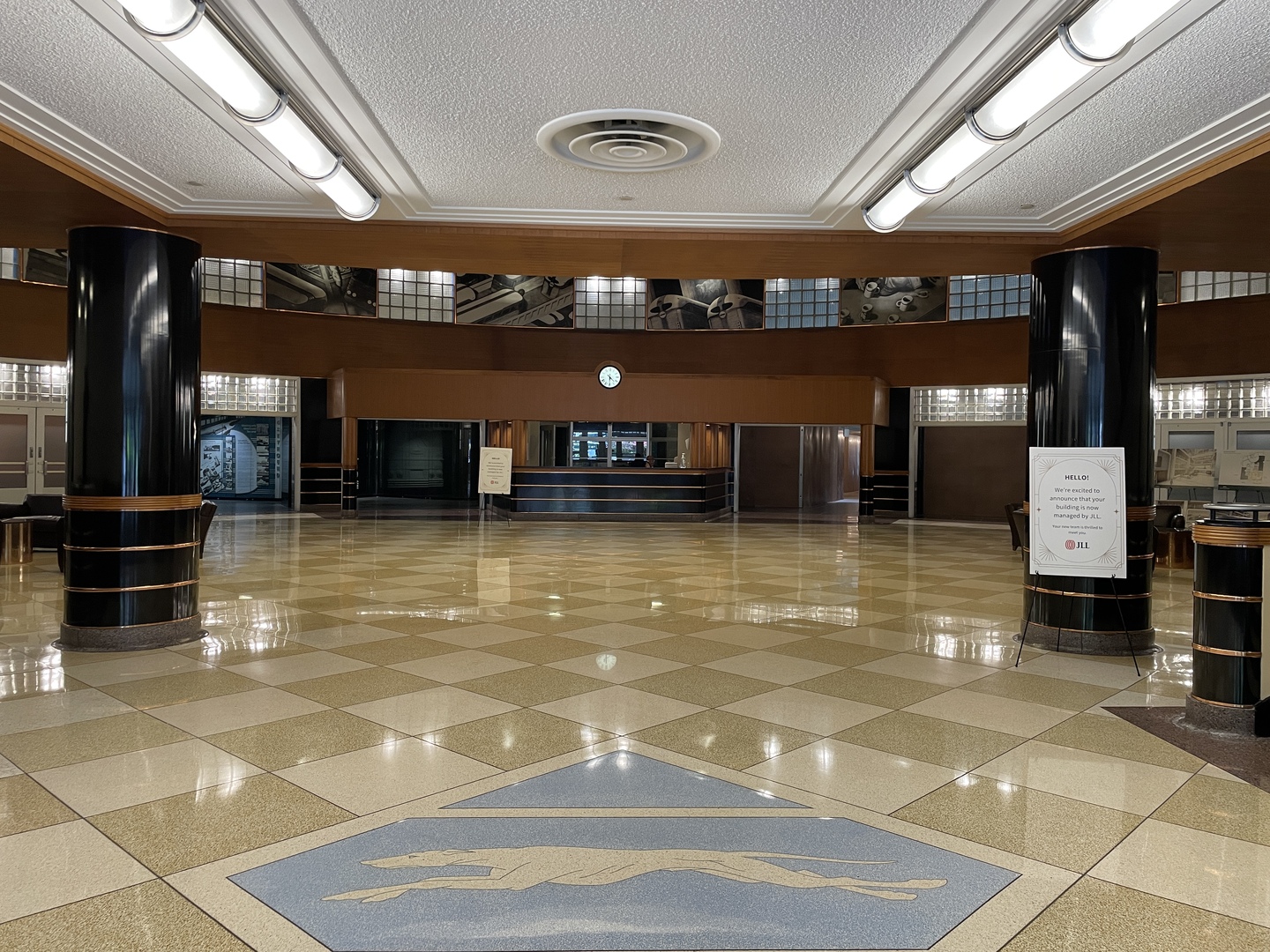
Facing the Waiting Room from the Lobby
Date: 2025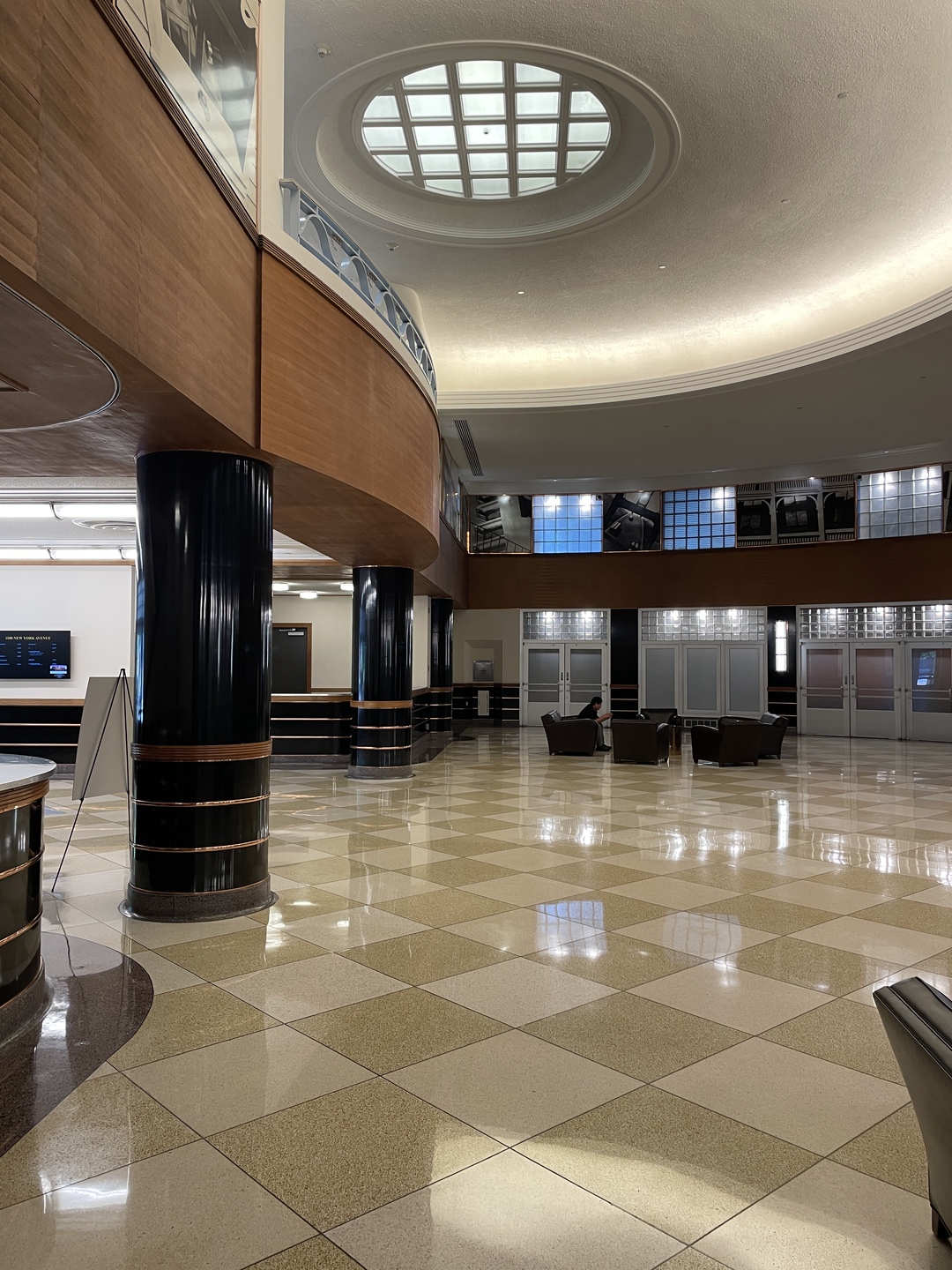
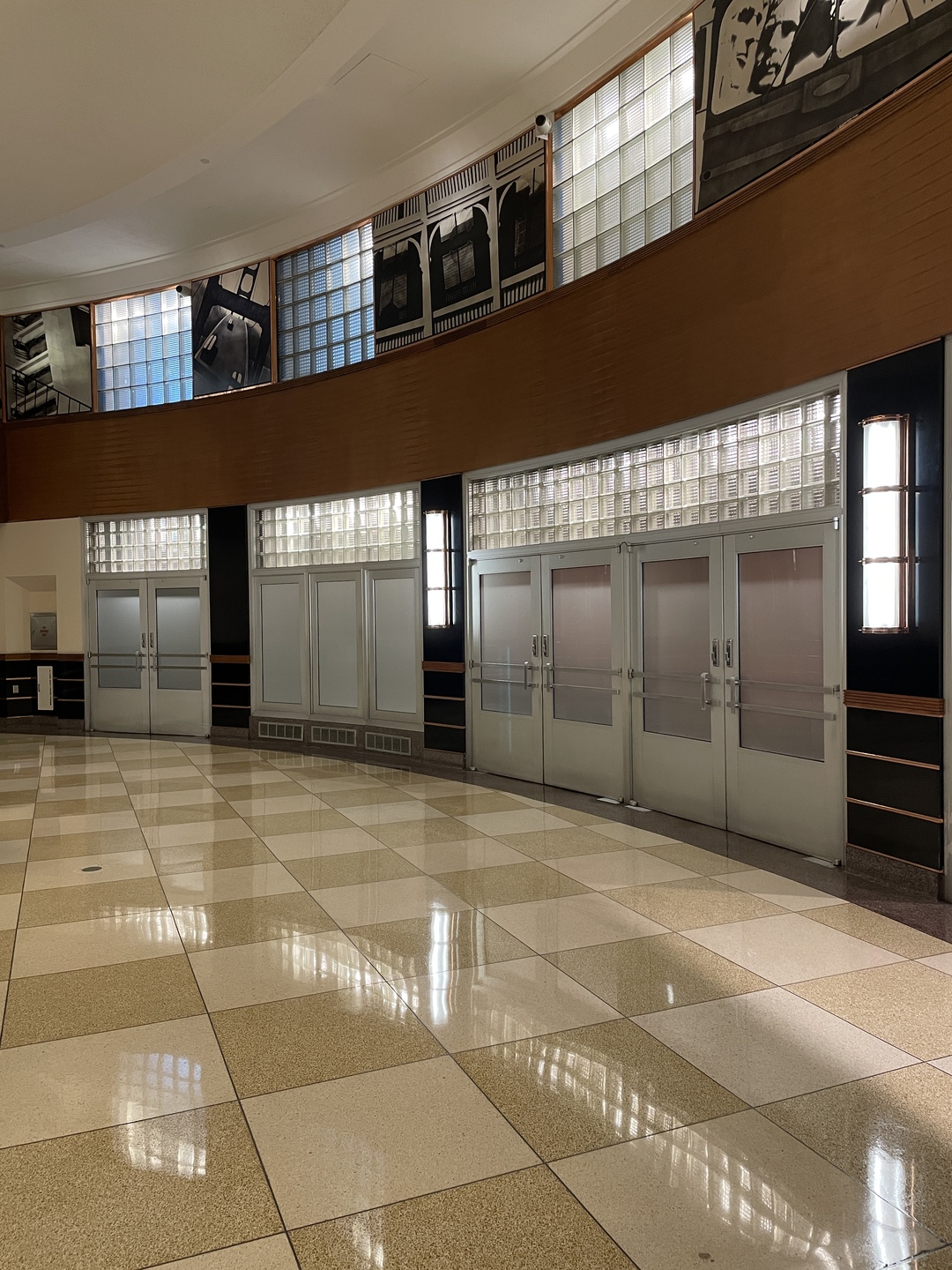
Looking east in the Interior Waiting Room
Date: 2025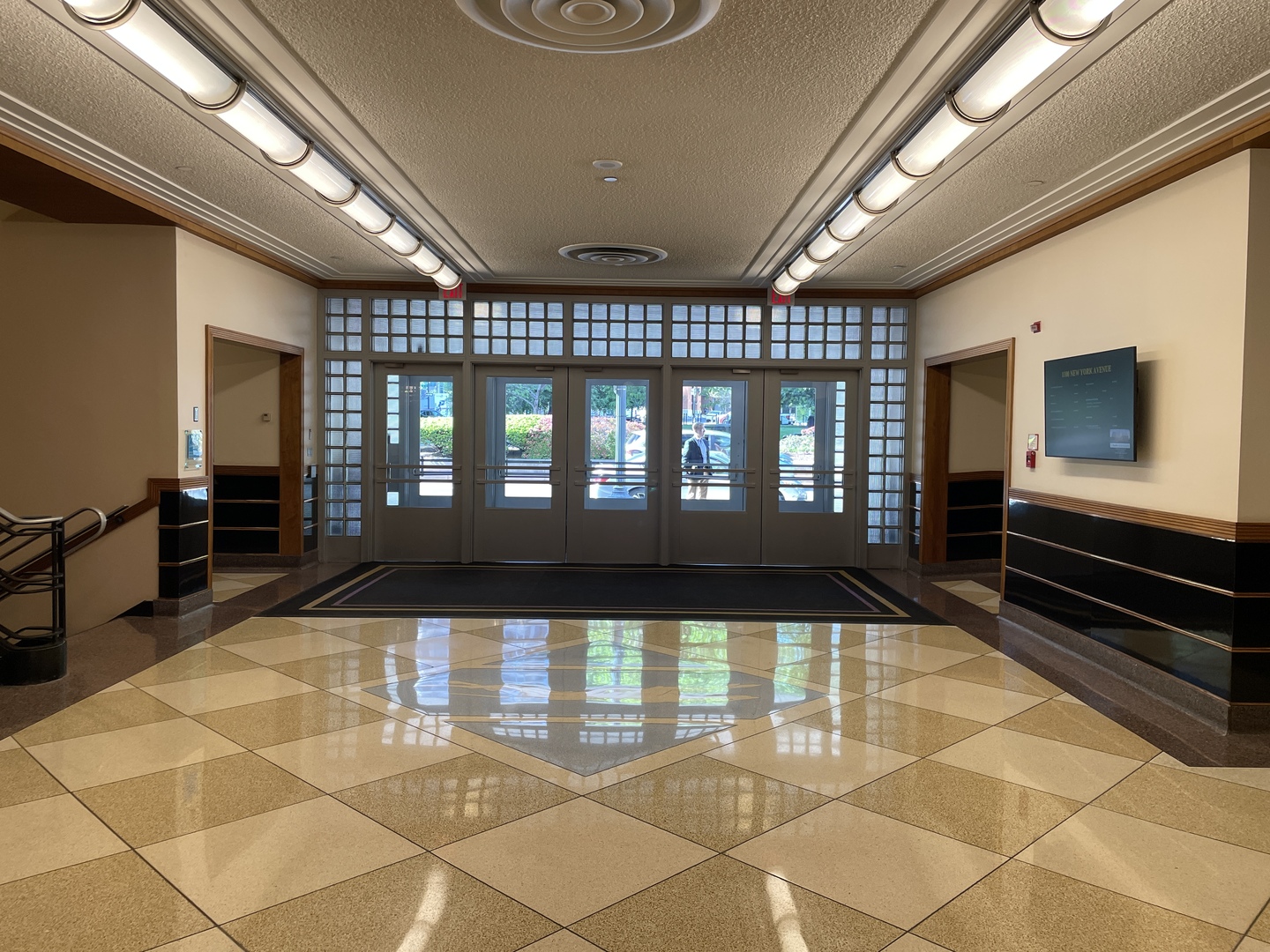
View of Lobby and main entrance
Date: 2025